 admin
Ipswich Town manager Gary O’Neil launched a furious tirade against the Video Assistant Referee system following his side’s limp 2-0 defeat at Tottenham Hotspur, insisting his players were “cheated” out of a result despite a performance that offered precious little going forward.
The defeat—Ipswich’s fifth Premier League match without a win—left the Tractor Boys 16th in the table, just two points above the relegation zone . On the pitch, the story was an 18-year-old making history: Luca Williams-Barnett marked his first Premier League start with a goal and an assist, becoming the second-youngest player ever to achieve the feat in a single game behind Michael Owen . But O’Neil, standing before the media afterwards, was in no mood to discuss the teenager’s fairytale.
“I’m Not Going to Pretend That Was a Fair Result”
“I’ve watched the incidents back, and I’ll be honest with you—we were cheated tonight,” O’Neil said, his voice tight with frustration. “I’m not going to stand here and pretend that a 2-0 defeat is purely about football when I’ve got players in that dressing room who have been let down by decisions that are supposed to be objective.”
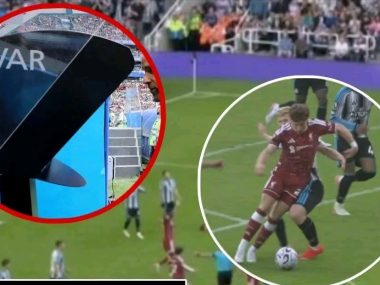
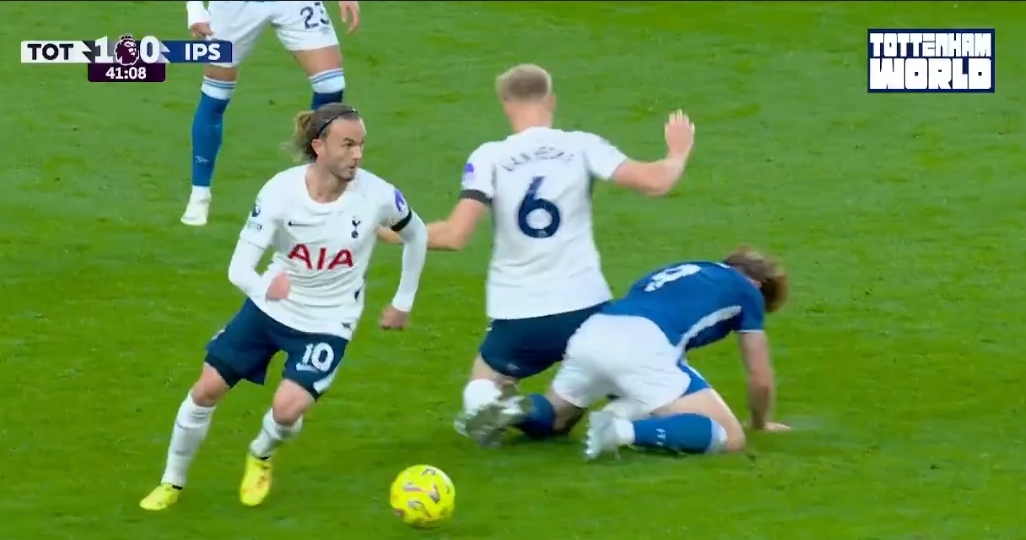
O’Neil’s ire centred on two first-half flashpoints. The first came inside the opening fifteen minutes when Leif Davis went down under contact from Pedro Porro near the edge of the Tottenham box. Referee Robert Jones waved play on, and VAR did not intervene. The second arrived shortly before half-time, when a challenge on Julio Enciso inside the area went unpunished despite replays suggesting contact.
“At 0-0, if we get the penalty, it’s a completely different game,” O’Neil insisted. “At 1-0 down, if we get the penalty, it’s a different game. Fine margins, and once again they’ve gone against us.”
The Kudus Incident and VAR’s Silence
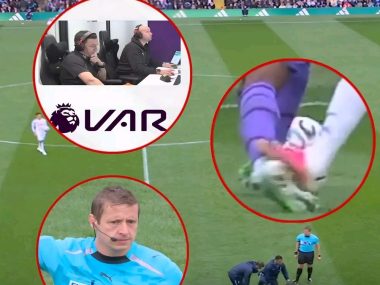
The Ipswich boss also pointed to a second-half incident involving Mohammed Kudus, whose challenge left Davis requiring treatment. VAR checked the flashpoint and cleared it, a decision that left O’Neil visibly incandescent on the touchline .
“I’m told the check was complete,” O’Neil said. “But what is being checked? My player is lying on the ground, he has to come off, and I’m standing there being told everything is fine. From what I’ve seen on the monitor, there are clear and obvious errors being made and nobody is doing anything about it.”
When pressed on whether Ipswich’s attacking output—just three shots on target and an expected goals figure of 0.38 compared to Tottenham’s 2.77—was the more fundamental concern, O’Neil grew defensive .
“I’m not hiding from the performance,” he said. “But I’m also not going to let the officials off the hook. The players are human beings. When you feel like you’re fighting against more than just the opposition, it affects you. I’m not making excuses—I’m telling you what I saw and what my players felt.”
A Familiar Refrain
This is not unfamiliar territory for O’Neil. During his time at Wolves, he repeatedly clashed with the PGMOL over contentious VAR decisions, at one point suggesting officials might harbour unconscious bias toward bigger clubs . He was contacted by the FA over those comments and later served a touchline ban for his reaction to a disallowed goal against West Ham .
Now at Ipswich, the pattern appears to be repeating. Earlier this season, the Premier League’s Key Match Incidents panel ruled that Ipswich should have been awarded a penalty in a 2-2 draw at Hull City, with four of five members agreeing VAR should have overturned the on-field decision . O’Neil’s sense of grievance, whether justified or not, has a documented foundation.
O’Neil confirmed the club would submit a formal complaint to the PGMOL regarding the Tottenham incidents, though he acknowledged such actions rarely produce tangible outcomes.
“I’ll put my feelings across, and then I’ll get on with trying to keep this football club in the Premier League,” he said. “That’s my job. But I’d be lying if I said I wasn’t questioning what the point of VAR is when it consistently fails to correct the things it was brought in to correct.”
The Reality Beneath the Rage
For all O’Neil’s fury at the officials, the uncomfortable truth is that Ipswich were comprehensively outplayed. Tottenham controlled 64% of possession, generated 2.77 expected goals, and were inspired by a teenager making his full debut . Ipswich, by contrast, rarely troubled Antonin Kinsky and have now conceded in each of their last 30 Premier League matches—a run that speaks to systemic defensive problems rather than officiating grievances .
O’Neil’s position is not yet under immediate threat, but the trajectory is concerning. Ipswich have won just once in their last seven league games, and next up is a visit from Aston Villa .
“We’ve been cheated,” O’Neil repeated as he left the press room. “And I’m not going to pretend otherwise.”
Whether the board shares his interpretation—or whether they see a manager deflecting from deeper issues—may determine how much longer he gets to make that argument.

 admin