 admin
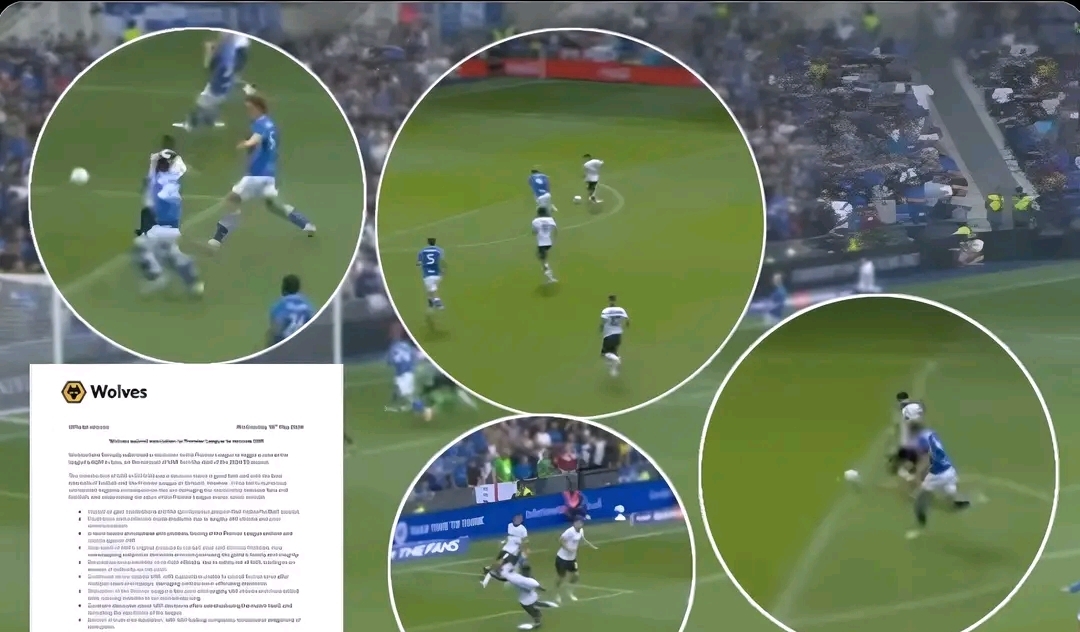
adminWolverhampton Wanderers supporters have once again been left frustrated by a controversial refereeing decision after an incident involving significant contact inside the penalty area sparked debate.
The latest controversy has renewed questions about how officials interpret physical challenges and when contact should be considered enough to award a penalty.
For Wolves fans, the issue is particularly sensitive because the club has already been involved in several high-profile refereeing controversies in recent seasons.
Why was the penalty not awarded?
The key point is that contact inside the penalty area does not automatically constitute a foul.
Referees are required to assess the nature of the challenge, whether the defender made a legitimate attempt to play the ball, the intensity of the contact and whether the attacking player was actually impeded.
That means an incident can look serious when viewed from one angle without necessarily meeting the threshold for a penalty.
The controversy surrounding Wolves has therefore centred on whether the contact crossed the line between normal physical competition and an illegal challenge.
Supporters who believe their player was clearly impeded understandably feel that a spot-kick should have been awarded. However, from the officials’ perspective, the contact may have been judged insufficient to warrant intervention.
Wolves have been here before
The latest debate also brings back memories of Wolves’ controversial penalty decision against Manchester United in August 2023.
During that match, Wolves were denied a late penalty after goalkeeper André Onana collided with Sasa Kalajdzic.
Then-manager Gary O’Neil was furious with the decision, while VAR ultimately decided that the referee’s original call did not amount to a clear and obvious error.
That incident became one of the most discussed refereeing moments of the early Premier League season and highlighted the extremely high threshold required for VAR intervention.
VAR and the Championship debate
The latest controversy comes at a particularly interesting time for Wolves.
Wolves are now competing in the Championship after relegation from the Premier League, and the second-tier competition does not currently have VAR.
That issue was highlighted during Sunday’s dramatic 2-2 draw between Birmingham City and Wolves.
Birmingham’s equaliser through Jay Stansfield was controversial, with Wolves boss César Peixoto claiming the forward appeared to handle the ball during the move.
Peixoto subsequently questioned why VAR is not available in the Championship, arguing that technology could help officials make better decisions.
His comments add another dimension to the wider discussion about controversial decisions involving Wolves.
Fans want consistency
The biggest frustration among supporters is not necessarily that every piece of contact should result in a penalty.
Instead, many fans want consistency.
If similar challenges are penalised in one match but ignored in another, supporters naturally begin to question how decisions are being interpreted.
Modern technology has arguably made that frustration even greater.
Fans can now watch incidents repeatedly from multiple angles and in slow motion. Referees, however, still have to make many decisions in real time, meaning disagreements over interpretation are inevitable.
Wolves must move on
Despite the controversy, Wolves cannot allow refereeing decisions to become a distraction from their wider campaign.
Sunday’s 2-2 draw with Birmingham demonstrated both the attacking threat and defensive problems within César Peixoto’s side.
Wolves took the lead through Fer López before Birmingham levelled. Ladislav Krejci restored Wolves’ advantage, only for Jackson Tchatchoua to score an unfortunate own goal and make it 2-2.
The visitors also had a huge opportunity to win the game late on, but Adam Armstrong lifted his effort over the open goal from close range.
That missed chance ultimately proved just as important as any refereeing decision.
The bigger issue
The latest controversy has once again demonstrated why communication and consistency remain so important in football officiating.
A clear explanation from the relevant authorities can help supporters understand why a decision was made, even if they strongly disagree with it.
For Wolves, though, the message will have to be simple: focus on performances and take refereeing decisions out of the equation whenever possible.
The more chances the team creates and the more efficiently those opportunities are converted, the less likely one disputed decision will determine the outcome of a match.
For now, however, the penalty debate is unlikely to disappear quickly.
Wolves supporters will continue demanding greater consistency from officials, while the club will hope future matches are decided by the players rather than controversial refereeing calls.


 admin
admin