 admin
adminEngland secured a place in the next stage of the 2026 FIFA World Cup after edging past DR Congo with a 2-1 victory, but the result has done little to ease concerns about the team’s overall display.
Despite advancing, Thomas Tuchel’s side produced a performance that left many supporters frustrated.
For much of the contest, England struggled to establish control, appearing disorganized, vulnerable in defense, and lacking the energy expected from one of the tournament’s leading contenders.
DR Congo matched the Three Lions in both physicality and tactical discipline, creating several dangerous opportunities and exposing weaknesses that stronger opponents could exploit later in the competition.
Ultimately, the difference between the two teams came down to England captain Harry Kane.
The experienced striker once again proved his importance by scoring both goals to guide England to victory. His composure in front of goal spared the Three Lions from what could have been a major World Cup upset. Without Kane’s clinical finishing, England may have found themselves facing extra time—or even the uncertainty of a penalty shootout.
Given England’s uneven performance throughout the match, there were genuine doubts about whether they would have emerged victorious had the game gone the distance.
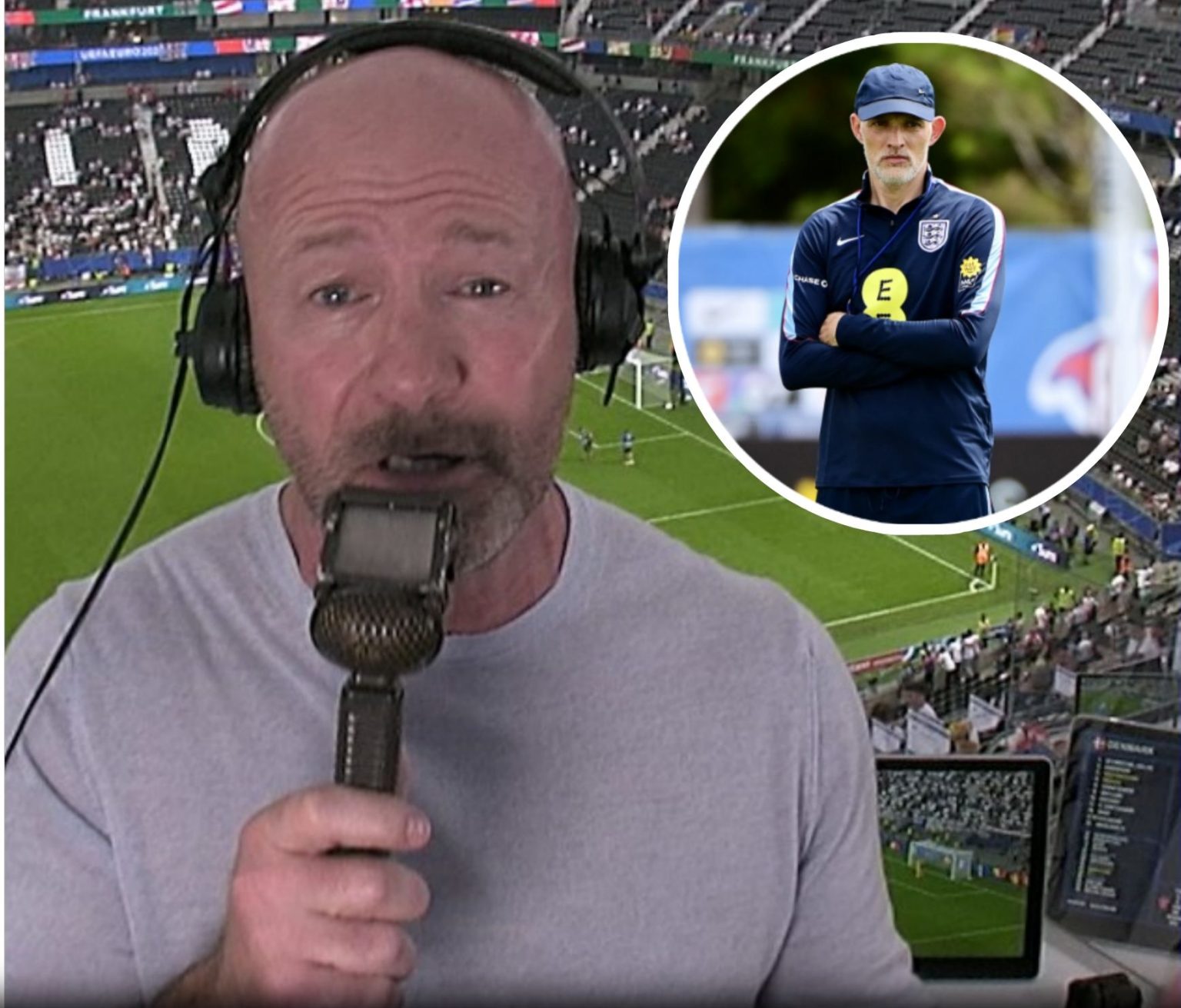
Following the final whistle, former England captain Alan Shearer was asked whether supporters should be worried about the team’s display despite securing qualification.
Asked if England’s performance was convincing, Shearer made his feelings clear.
He suggested that the victory owed far more to Harry Kane’s quality than to England’s overall display, arguing that without their captain’s decisive contribution, the match could have produced one of the biggest surprises of the tournament. According to Shearer, England spent long periods second best, lacking composure, intensity, and control.
The former striker went on to express broader concerns about the squad, saying he had watched every England match during the World Cup and believed certain players had failed to justify continued selection. He stressed that knockout football leaves little room for inconsistent performers.
Shearer then singled out several individuals for criticism.
Discussing Noni Madueke, he felt the winger once again struggled to make the right decisions in important moments and offered insufficient defensive support when England were under pressure.
He also questioned Marcus Rashford’s contribution, suggesting the forward failed to make a meaningful impact despite receiving opportunities to influence the contest. In Shearer’s view, Rashford’s movement lacked sharpness, and England depended too heavily on Kane for attacking inspiration.
Djed Spence was another player to come under scrutiny. Shearer argued that the defender experienced a difficult evening at the back and warned that similar defensive mistakes would almost certainly be punished by stronger opponents later in the tournament.
Looking ahead, Shearer urged Thomas Tuchel to make difficult selection decisions before England’s next match.
He warned that the competition would only become more demanding and insisted that continuing to rely on players who are not performing consistently could end England’s World Cup ambitions much sooner than expected.
Shearer concluded by emphasizing that reputation alone should never guarantee a place in the starting lineup. In his opinion, every player must continue to earn their position through performances, especially during the knockout stages, where the margin for error is extremely small.
Although England achieved their immediate objective by progressing to the next round, the performance has reignited debate over whether several members of Tuchel’s squad can cope with the pressure of elite knockout football.
For now, Harry Kane’s match-winning display has overshadowed many of England’s shortcomings. However, unless the team’s overall level improves significantly, future opponents may not allow the Three Lions to escape with another narrow victory.

 admin
admin