 admin
Former Premier League referee Mike Dean has waded into the latest Chelsea controversy, but his argument inadvertently reveals a uncomfortable truth: the Blues weren’t robbed by VAR at Everton — they were spared by it.
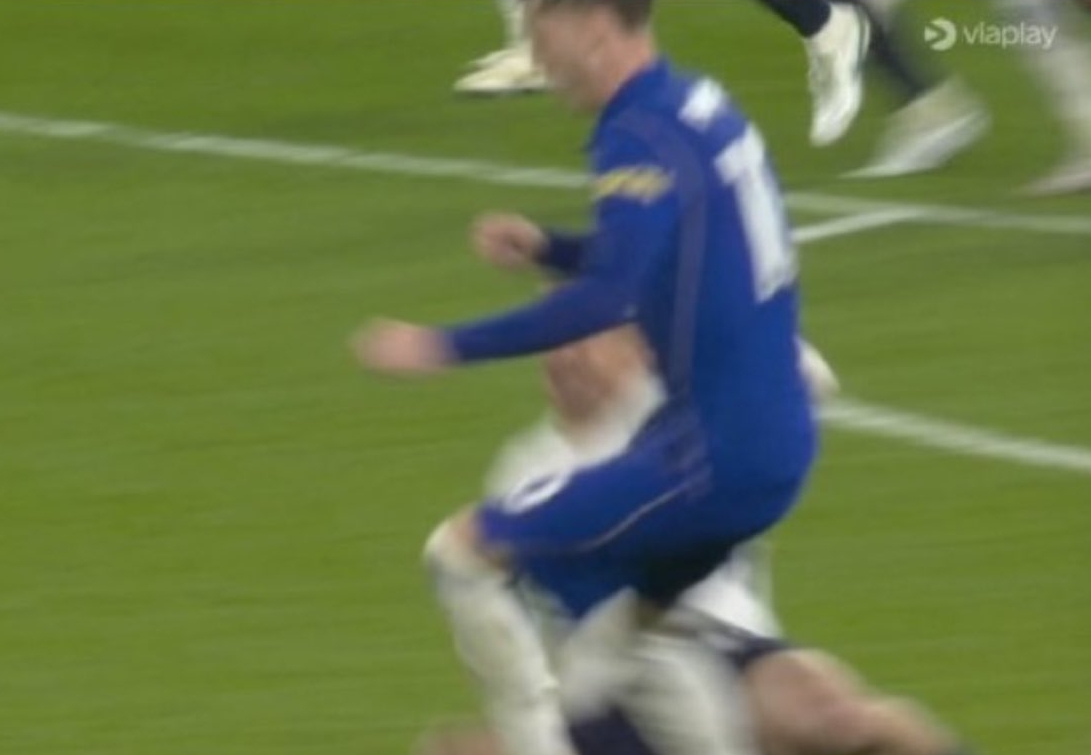
The flashpoint came during Chelsea’s 2-0 victory over Everton at Hill Dickinson Stadium, when Morgan Rogers lunged into a full-blooded challenge on James Garner shortly before half-time . Rogers was already carrying a yellow card. Referee Paul Tierney waved play on. VAR checked. Nothing changed.
Dean, speaking on Sky Sports’ Soccer Saturday, was unequivocal. “I think it’s a minimum yellow. I called red straight away,” he said. “When you see the angle we’ve seen now, he doesn’t get the ball, Rogers. He might’ve just flicked it, but he catches him with his stud just on the inside of Garner’s knee. I think it’s a straight red me, I really do” .
Strong words. But here’s the problem with the “robbed” narrative: VAR couldn’t have saved Everton even if it wanted to.
The Procedural Trap That Let Chelsea Off the Hook
Dermot Gallagher, another former elite referee, explained the technicality on Ref Watch. Because Tierney didn’t award a free-kick, VAR’s hands were tied. “If the referee hasn’t given a foul, it takes the VAR out of the equation,” Gallagher said. “I think it’s on the threshold [for a straight red card] and once it’s there, that’s the dilemma of this second yellow card” .
In other words: the very mechanism Dean implicitly criticises for failing to intervene was structurally incapable of intervening. This wasn’t a VAR error. This was an on-field officiating error that VAR’s protocols couldn’t correct.
Mark Clattenburg, who agreed with Dean that Rogers was “very lucky,” made the same admission: “VAR can’t, even with the retrospective power, (and) doesn’t have the power to issue a second yellow card where the referee hasn’t” .
So if anyone was “robbed,” it was Everton — by Paul Tierney’s whistle, or lack thereof. Not by the video assistant.
The Palmer Incidents: Where “Robbed” Becomes Absurd
If Dean’s argument was merely that Chelsea got lucky, it would be defensible. But framing it as robbery collapses entirely when you examine Cole Palmer’s afternoon.
Palmer, already on a yellow for dissent, punted the ball 40 yards into the air after Everton were awarded a free-kick — a textbook time-wasting offence that almost always draws a caution. Jay Bothroyd was baffled: “I’ve seen people throw the ball up in the air and get yellow cards. He’s launched the ball up in the air about 40 yards but because it’s gone back to where it was, it’s not a yellow card? That’s definitely a yellow” .
Then, in stoppage time, Palmer caught Jarrad Branthwaite while pressing. Tim Sherwood: “Nine times out of 10 it is a yellow card and it should have been then” .
By the letter of the law, Chelsea could have finished with nine men. Instead, they finished with eleven and three points. If that’s “being robbed,” the Premier League’s definition of larceny needs urgent revision.
Why This Matters Beyond One Match
The Dean-Clattenburg chorus matters because it feeds a growing narrative that Chelsea are somehow victims of systematic officiating injustice. The VAR table for 2026/27 shows Chelsea with a net score of -1 — hardly the profile of a side being systematically plundered .
More importantly, the Rogers incident exposes a genuine structural flaw in VAR’s remit: second yellow cards remain essentially unreviewable unless the on-field referee has already whistled for a foul. That’s a gap worth debating. But it’s a gap that hurt Everton on Saturday, not Chelsea.
Dean’s “I called red straight away” soundbite will travel. It’s punchy, it’s authoritative, and it fits the grievance template. But strip away the former referee’s imprimatur and the facts point the other way: Chelsea benefited from a refereeing lapse that VAR’s rules prevented from being fixed. That’s not robbery. That’s luck — the kind that leaves the other side wondering what the point of the technology is.
Everton manager David Moyes, whose side lost the match, put it more simply than any pundit: “I think that might have made a second yellow. But that wasn’t the case” . He’s right. It wasn’t. And no amount of ex-referee hand-wringing will change who actually paid the price.


 admin