 admin
adminThe pressure on football’s refereeing authorities has intensified following another controversial decision involving the Old Firm, with the latest incident reigniting the debate over VAR and the consistency of officiating.
The Celtic-Rangers rivalry is one of the most fiercely contested fixtures in Scottish football, and refereeing decisions are almost always placed under an enormous microscope. However, the latest controversy has generated particular frustration because supporters believe the officials had the benefit of technology but still failed to reach the correct conclusion.
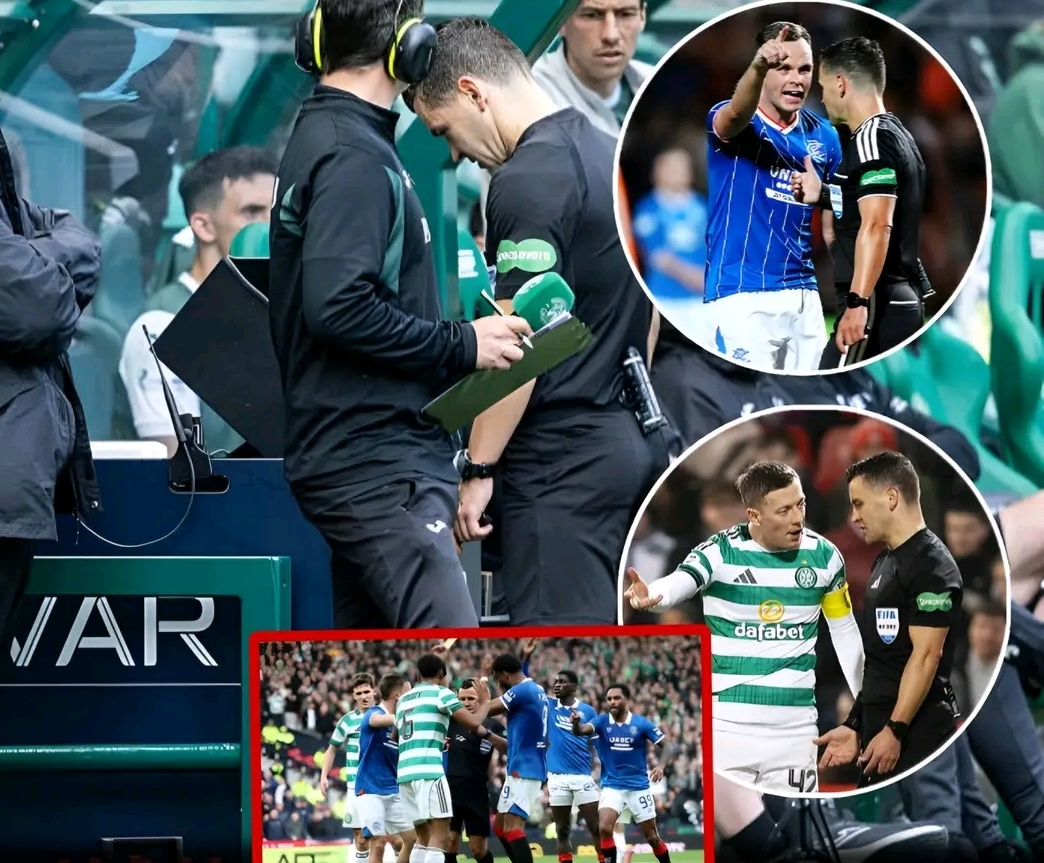
Footage from the incident has quickly circulated among supporters, with players from both sides appearing to confront or challenge the referee over the decision. The heated reactions have only added fuel to an already growing debate about the standard of officiating in high-profile matches.
The controversy has also raised questions about the role of VAR and whether the system is being used consistently.
VAR was introduced to help officials correct clear and significant errors in key situations. It was never intended to eliminate every subjective decision from football, but supporters expect VAR officials to intervene when there is compelling evidence that an important decision may have been wrong.
That is where the latest Old Firm incident has created frustration.
When supporters believe an obvious error has occurred but see no meaningful VAR intervention, the disappointment can become greater than it would have been following an ordinary refereeing mistake.
For Celtic and Rangers supporters, the stakes are even higher because of the history and intensity surrounding the fixture.
Every major tackle, penalty appeal, booking and VAR review can become a defining moment, particularly when the two clubs are involved in a closely fought encounter.
The latest incident has therefore placed renewed attention on the authorities responsible for refereeing standards.
Questions are now being asked about whether the decision was considered correct under the Laws of the Game and VAR protocols, or whether officials simply failed to identify an error that should have been corrected.
That distinction is important.
If the decision was correct, supporters will expect a clear explanation of why the officials reached that conclusion. If the decision was incorrect, acknowledging the mistake would arguably be the more transparent approach.
There is already precedent for refereeing authorities publicly acknowledging errors after major incidents. Such explanations can be uncomfortable, but they can also help supporters understand how decisions are reached and why VAR did—or did not—intervene.
The central issue is therefore becoming less about whether Celtic or Rangers benefited from the decision and more about accountability.
Supporters want consistency.
They do not necessarily expect referees to get every decision right. Football remains a fast-moving sport, and officials will inevitably make mistakes. But with modern technology available, fans increasingly expect major errors to be identified and corrected when the evidence is sufficiently clear.
The Old Firm controversy has once again highlighted that problem.
The reactions of the players involved have also become part of the discussion, with footage showing the frustration surrounding the incident. However, the wider issue goes beyond the individuals involved.
It concerns the credibility of the refereeing system itself.
When controversial decisions repeatedly dominate discussions after major matches, confidence in officiating can suffer. That is why transparency from the relevant authorities is so important.
Celtic and Rangers matches will always produce passionate reactions. Players will challenge decisions, managers will complain and supporters will passionately defend their clubs.
That is part of the nature of the rivalry.
But the introduction of VAR was supposed to provide an additional layer of protection against serious mistakes, not create another source of confusion.
The latest controversy has therefore created another uncomfortable moment for Scottish football’s refereeing system.
Whether the decision is eventually judged to have been correct or a genuine officiating error, the incident has demonstrated why supporters continue to demand greater clarity around VAR decisions.
For now, the debate is unlikely to disappear.
As footage continues to circulate and fans analyse the incident from different angles, pressure will remain on the authorities to explain what happened and provide clarity over the decision-making process.
The message from supporters is increasingly straightforward: if VAR is available to correct major mistakes, it must be applied consistently, transparently and effectively.
Until that confidence is restored, every major Old Firm refereeing decision is likely to trigger another VAR storm.


 admin
admin