 admin
adminEngland may have secured a place in the 2026 FIFA World Cup semi-finals with a dramatic quarter-final victory over Norway, but the controversy surrounding Norway’s opening goal continues to dominate post-match discussions.
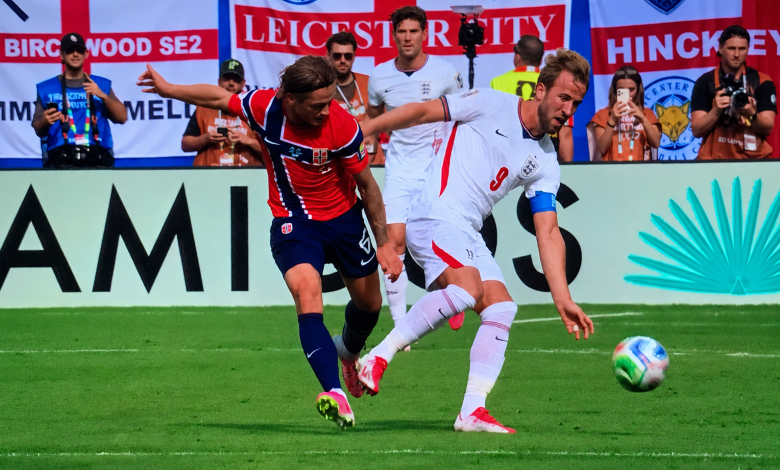
The debate erupted almost instantly after Andreas Schjelderup fired Norway into the lead. England captain Harry Kane immediately protested to referee Clément Turpin, insisting he had been fouled during the build-up. Several England players surrounded the official as the goal was checked, while supporters across social media questioned why VAR chose not to intervene.
FIFA has now clarified why the goal was allowed to stand, although its explanation has done little to calm the widespread criticism.
Why VAR Upheld Norway’s Goal
After conducting a thorough review, the Video Assistant Referee concluded that referee Clément Turpin had not made a clear and obvious error.
According to FIFA, Patrick Berg’s challenge on Harry Kane was judged to be a legitimate physical contest rather than a foul. Since Turpin had a clear view of the incident and believed the contact was fair, VAR determined there was no reason to recommend an on-field review.
Under FIFA’s VAR guidelines, officials can only overturn or review a decision when there is evidence of a clear mistake. Because the challenge was not considered a foul, Norway’s goal remained valid.
Fans Compare It To Argentina vs Egypt
Despite FIFA’s explanation, England supporters quickly pointed to another controversial incident earlier in the tournament involving Argentina and Egypt.
During Argentina’s Round of 16 clash with Egypt, the African side appeared to have scored an important goal before VAR reviewed the entire attacking move. Officials eventually spotted a foul by Marwan Attia on Lisandro Martínez earlier in the build-up, leading to the goal being ruled out.
FIFA’s refereeing chief, Pierluigi Collina, later defended that decision by stating that VAR is permitted to review any offence during the attacking phase if it directly results in a goal, insisting that “a foul is a foul.”
That previous explanation has now reignited the controversy.
Many England supporters questioned why Egypt’s goal was disallowed because of a foul in the build-up, while Norway’s strike was allowed to stand despite Harry Kane appearing to be brought down moments before Schjelderup scored.
FIFA Explains The Difference
FIFA insists the two incidents are not comparable because officials reached different conclusions about the challenges themselves.
In the Argentina-Egypt encounter, VAR determined that a clear foul had occurred before the goal, requiring play to be brought back and the goal cancelled.
Against England, however, VAR concluded that Berg’s challenge on Kane was a fair contest and did not constitute a foul. Since no offence was identified, there was no reason to overturn the referee’s original decision.
According to FIFA, consistency is based on whether the contact is judged to be a foul—not simply on whether VAR reviews the attacking phase.
Debate Continues Across Social Media
The governing body’s explanation has failed to convince many England fans.
Supporters flooded platforms such as X, Facebook and Reddit with comparison videos of both incidents, accusing FIFA of applying inconsistent standards during the tournament.
Others defended the officials, arguing that football is a physical game and that Kane was fairly challenged rather than illegally fouled.
The incident has since become one of the biggest refereeing controversies of the 2026 FIFA World Cup.
England March Into The Semi-Finals
Despite the disputed decision, England responded brilliantly on the pitch.
Jude Bellingham inspired Thomas Tuchel’s side with a superb performance, scoring the equaliser before netting the decisive goal in extra time as England completed a thrilling 2-1 comeback victory over Norway to book their place in the World Cup semi-finals.
While England remain firmly in the hunt for the trophy, the debate surrounding Norway’s opening goal shows no signs of fading.
For many supporters, comparisons with the Argentina-Egypt VAR incident have only intensified questions about the consistency of officiating throughout the tournament, leaving FIFA facing renewed scrutiny over one of the competition’s most controversial decisions.


 admin
admin