 admin
adminNORWAY BOSS STÅLE SOLBAKKEN WANTS KEY ENGLAND PLAYER DRUG TESTED BEFORE WORLD CUP QUARTER-FINAL
Norway Boss Stirs Controversy with Call for Targeted Doping Test on England Star Ahead of World Cup Quarter-Final
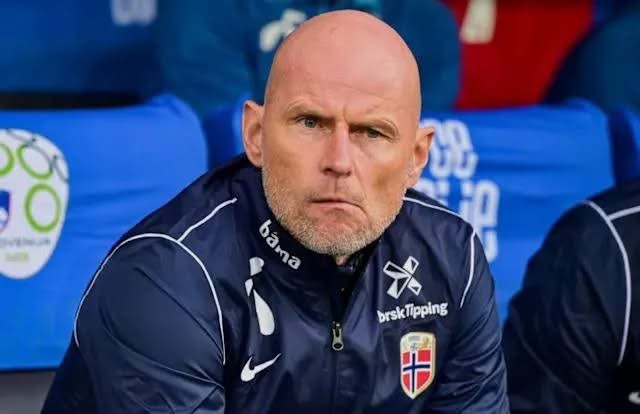
In a bold and unexpected move, Norway manager Ståle Solbakken has publicly urged FIFA to conduct targeted drug testing on an unnamed England player just days before their blockbuster World Cup 2026 quarter-final showdown in Miami.
The request, made during a pre-match press conference, has intensified the pre-game narrative, sparking fierce debate over fairness, anti-doping enforcement, and the psychological brinkmanship that often defines high-stakes knockout football.
The match itself already carries enormous weight. Norway, still riding the euphoria of a shock round-of-16 victory over five-time champions Brazil, now face an England side that narrowly edged out co-hosts Mexico in a pulsating 3-2 win.
With Erling Haaland and Martin Ødegaard leading a Norwegian squad packed with Premier League talent, and England countering with the likes of Harry Kane and Jude Bellingham, the stage is set for a thrilling contest. Yet Solbakken’s comments have added an unexpected layer of tension.
What Solbakken Said—and What He Didn’t
Addressing journalists, Solbakken avoided naming the player directly but described him as a “central” figure in England’s system, suggesting that his recent physical displays warranted closer examination under anti-doping rules. “We hold English football and its players in the highest regard,” Solbakken stated.
“But at this level, where every marginal gain counts, we must prioritize transparency and fairness. Certain patterns in performance and recovery have drawn our attention, and we believe a proactive test would reinforce trust for all parties.”
While no allegations of cheating were made, the Norwegian coach framed the appeal as a routine precaution rather than an accusation. “This is not about pointing fingers,” he clarified. “It’s about protecting the integrity of our sport. FIFA and the relevant bodies should act quickly to uphold credibility.”
The timing is significant. Though FIFA and WADA already conduct both random and targeted tests—particularly in high-profile matches—public demands from an opposing manager remain unusual and often walk a fine line between principle and gamesmanship.
Solbakken, known for his direct style and respected coaching pedigree across Denmark and England, is generally seen as measured rather than incendiary, making his intervention all the more striking.
A Context Steeped in Irony: Norway’s Own Anti-Doping Quirk
The controversy takes on added resonance when viewed against Norway’s own recent anti-doping episode. In September 2024, during a Nations League camp, Anti-Doping Norway arrived unannounced and, in a bizarre administrative error, requested tests on two long-deceased legends—Jørgen Juve (who died in 1983) and Einar Gundersen (who passed in 1962).
Solbakken later joked about the incident, quipping that both returned “negative tests” and wondering if it was a prank. While amusing, the episode underscored Norway’s institutional commitment to clean sport—and perhaps Solbakken’s genuine sensitivity to the issue.
Norwegian football has long championed integrity, investing heavily in education and monitoring for its rising generation, including Haaland, Ødegaard, and Antonio Nusa.
Solbakken’s current stance may well stem from a desire to ensure parity against England’s financially powerful and talent-dense setup, whose players endure grueling Premier League schedules and sometimes face questions about recovery methodologies.
England, meanwhile, maintain a strong compliance record. The FA and players’ union have consistently backed rigorous testing. Manager Thomas Tuchel responded with measured diplomacy: “We trust the system. Our players are tested regularly, and we have complete faith in them.
Our focus remains on football, not distractions.” Kane and Bellingham, both in outstanding form, continue to drive England’s campaign.
Bigger Questions About Anti-Doping in Football
Solbakken’s remarks also reignite broader concerns about the effectiveness of current anti-doping protocols. Critics argue that testing can be reactive and uneven, particularly regarding substances that enhance endurance, recovery, or cognition without appearing on traditional banned lists.
Emerging challenges like gene doping, micro-dosing, and therapeutic use exemptions (TUEs) only add complexity.
FIFA has stepped up efforts in recent years, increasing out-of-competition tests and introducing biological passports. Still, high-profile suspensions and lingering suspicions around certain leagues keep skepticism alive.
This World Cup, staged across North America, introduces added variables—players navigating different time zones and climates, potentially leaning more heavily on legal supplements or medical interventions.
Dr. Elena Vargas, a sports scientist specializing in anti-doping, observed: “Public calls like this can be a double-edged sword. They may highlight genuine gaps, but without evidence, they risk undermining trust. The ideal is a robust, independent system that renders such rhetoric unnecessary.”
Mind Games or Genuine Concern?
Beyond the doping debate, the quarter-final pits two distinct footballing philosophies against each other. Norway, under Solbakken, play disciplined, high-intensity football with lethal counter-attacks centered on Haaland. England, evolving under Tuchel, combine physical power with technical skill, capitalizing on set-pieces and the inventiveness of Bellingham and Phil Foden.
Psychologically, Solbakken’s intervention could be read as an attempt to unsettle England—forcing them to address external noise and potentially disrupting their focus.
England have long grappled with “expectation pressure”; adding a doping subplot could either harden their resolve or introduce unwanted tension.
For Norway, reaching the quarter-finals is historic. A semi-final appearance would be unprecedented. Haaland, typically reticent off the pitch, has emphasized the squad’s unity and enjoyment, a refreshing dynamic compared to more high-strung camps.
Fan Outcry and Media Storm
Social media has erupted with polarized reactions. Many English fans dismiss the call as psychological warfare or sour grapes, pointing to Haaland’s own extraordinary physique, which has occasionally drawn unsubstantiated speculation. Norwegian supporters largely back Solbakken, viewing his stance as principled and forward-looking.
Media coverage has been relentless, framing the story variously as legitimate advocacy or tabloid-fueled sensationalism. Headlines like “Norway Boss Demands Drug Test” may grab attention but risk flattening a nuanced issue.
Eyes on Miami
As both squads gather in Miami, the spotlight inevitably returns to the pitch. The outcome will be decided by football, not press-room exchanges. Nonetheless, Solbakken has ensured that anti-doping officials will remain vigilant. A positive test at this stage would be devastating—not just for the individual but for national pride and the tournament’s integrity.
Football thrives on rivalry and narrative. This one—clean competition versus competitive advantage—adds a compelling layer to an already electric encounter. Whether Solbakken’s plea leads to tangible action or is remembered as tactical jousting remains unclear. What is certain is that when Norway and England walk out, the world will scrutinize every sprint, tackle, and flash of brilliance with heightened intensity.
Ultimately, the beautiful game endures because it surprises and unites. May the best team—properly tested, fully prepared, and competing fairly—emerge victorious in what promises to be an unforgettable quarter-final.

 admin
admin