 admin
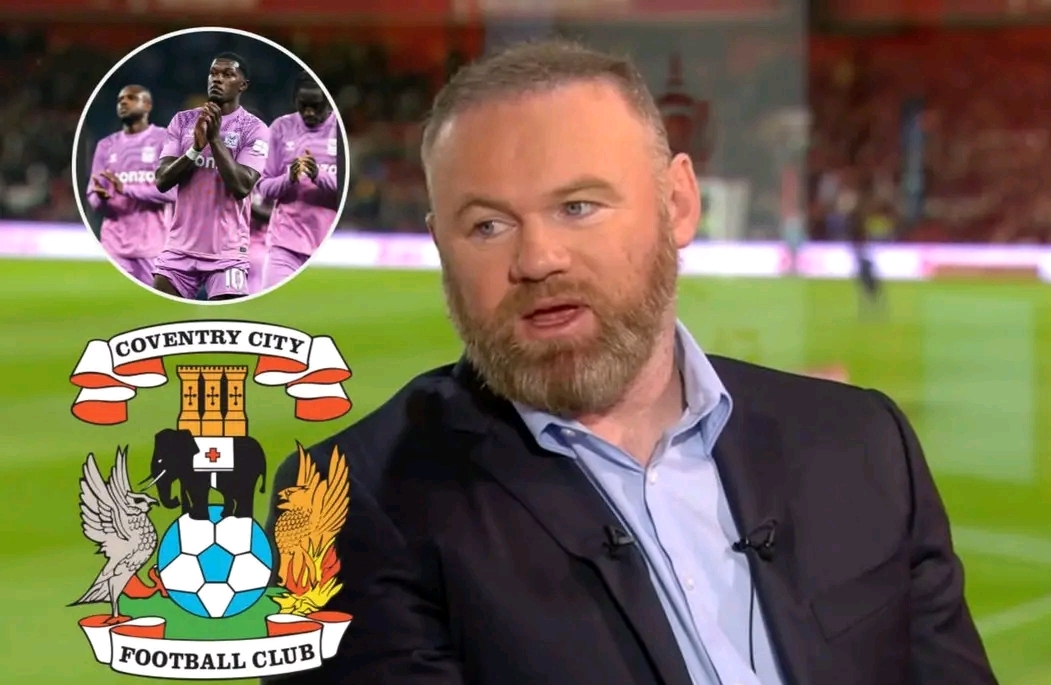
“TOXIC CULTURE!” — WAYNE ROONEY BLASTS COVENTRY CITY AFTER 3-1 DEFEAT TO TOTTENHAM AS MATT GRIMES AND CLUB HIERARCHY COME UNDER FIRE
Coventry City Under Fire Again After Tottenham Defeat as Unverified Rooney Comments Spark Debate
Coventry City have found themselves at the centre of fresh criticism following a 3-1 loss to Tottenham Hotspur, with alleged remarks from Wayne Rooney concerning the club’s culture, leadership and dressing-room atmosphere intensifying an already lively debate among supporters.
The former Manchester United and England forward is said—according to claims circulating amid the controversy—to have expressed unease about the balance of power within the club and whether Coventry’s hierarchy has granted the players excessive influence.
The comments attributed to Rooney have drawn particular attention to captain Matt Grimes and other senior members of the squad, raising questions about dressing-room standards, accountability and whether the club’s leadership is doing enough to uphold discipline.
“They are continuing the toxic culture. They fuel it, they give the power to the players,” Rooney was quoted as saying in the claims surrounding the controversy.
The statement has prompted discussion about whether Coventry’s difficulties run deeper than results on the pitch, and whether the club’s leadership needs to scrutinise more closely the standards being set within the squad.
However, the quotation and the allegations concerning Grimes should be regarded as unverified unless confirmed by a reliable source. The defeat itself offers ample grounds for discussion, but it would be unfair to present accusations about individual players or the club’s internal culture as established fact without evidence.
For Coventry, the immediate question is simple: how do they respond to a damaging result, and how do they stop one poor performance from becoming part of a wider pattern?
A Defeat That Raised Serious Questions
The 3-1 loss to Tottenham was a painful outcome for Coventry, especially given that supporters expected their team to show greater resilience against Premier League opposition.
Defeats are part of football, particularly against technically gifted opponents capable of punishing mistakes. What matters is how a team loses, how it reacts to setbacks, and whether the same weaknesses keep recurring from one match to the next.
For Frank Lampard, the task is to ensure the result does not undermine the progress he has been attempting to build.
Coventry need more than encouraging spells of play. They need consistency, concentration, defensive organisation and the composure to stay calm when the opposition builds momentum.
A 3-1 defeat inevitably invites scrutiny of the manager’s tactics, the players’ execution and the decisions made during the game. It also prompts supporters to ask whether the team has the mentality required to compete at the highest level.
Those questions grow more serious when results fall short of expectations.
The reaction to the alleged Rooney comments has therefore become part of a wider conversation about Coventry’s direction, even though the claims themselves still require verification.
Rooney’s Alleged Warning About a Toxic Culture
The phrase “toxic culture” is one of the most damaging descriptions that can be levelled at a football club.
It implies that the difficulties being experienced are not merely tactical or technical, but point to a possible breakdown in relationships, standards, communication or accountability.
If a club genuinely struggles with those issues, changing formations or signing another player may not be enough to solve the problem.
Successful teams generally need a clear structure in which the manager sets expectations, senior players lead by example and the board offers consistent support to the football department.
When those responsibilities become blurred, uncertainty can take hold.
Players may question decisions, managers may struggle to implement their ideas, and supporters may begin to suspect that the club lacks a unified direction.
That is why the allegations attributed to Rooney have attracted attention. They touch on a fundamental question: who ultimately sets the standards at Coventry City?
Nevertheless, a defeat does not prove that a club has a toxic culture. Nor should the phrase be treated as Rooney’s verified assessment without a reliable recording, interview or published report confirming that he made the remarks.
The discussion can still be valuable if it focuses on observable performances, leadership decisions and the standards Coventry must establish going forward.
The Debate Over Player Power
One of the central accusations in the circulating claims is that Coventry’s leadership has given too much power to the players.
This is a familiar argument in modern football. Whenever a team endures disappointing results, questions often arise about whether the manager has sufficient authority over the dressing room.
There is an important distinction between experienced players influencing a team positively and a dressing room becoming difficult for its manager to control.
Senior players can help establish discipline, communicate tactical instructions and support younger teammates through difficult periods. Their experience can be a major advantage when a club is fighting to maintain consistency.
However, leadership from experienced players must complement the manager’s authority rather than replace it.
The manager remains responsible for team selection, tactical decisions, substitutions, training standards and the overall footballing direction of the side. The board, meanwhile, must ensure the manager has the backing and resources needed to carry out that responsibility.
If disagreements arise, the club needs a clear process for resolving them professionally.
Coventry’s supporters will naturally want reassurance that everyone at the club is working towards the same objectives.
The answer cannot simply be to blame players whenever the team loses. Nor should a manager automatically escape scrutiny because the players have failed to deliver.
Football is a collective responsibility, and meaningful improvement requires every department to examine its contribution.
Why Matt Grimes Has Become Part of the Discussion
Matt Grimes’ role as a senior figure makes him a natural subject of discussion whenever questions arise about Coventry’s leadership on the pitch.
Captains are expected to provide composure, communicate with teammates and help the manager maintain standards during difficult periods.
They are also expected to respond positively when a match begins to turn against their team.
But being captain does not mean one player controls every aspect of a football club. Decisions about tactics, selection, recruitment and discipline involve different responsibilities, and claims that Grimes or other players control the team should not be repeated as fact without supporting evidence.
The fairest assessment of Grimes must focus on his actual performances, decisions and leadership rather than unverified accusations about his mindset.
Supporters can reasonably debate whether Coventry’s senior players are doing enough to influence matches positively. They can question whether the midfield is controlling games, whether the team responds effectively to pressure and whether experienced footballers are setting the right example.
Those are legitimate football questions.
What would be inappropriate is to turn speculation into a personal allegation and then treat that allegation as proof of a dressing-room problem.
The captain’s responsibility is significant, but so is the responsibility of the manager and the wider leadership structure. Ultimately, Coventry need their senior players to demonstrate leadership through their performances, their professionalism and their response to adversity.
Frank Lampard Faces an Important Test
The defeat also places renewed attention on Frank Lampard, who must find a way to turn disappointment into a convincing response.
A manager is judged not only by the results he achieves but also by the identity he gives his team, the standards he establishes and his ability to adapt when opponents expose weaknesses.
Lampard must assess what went wrong against Tottenham and determine which problems can be corrected quickly.
Was Coventry’s defensive shape sufficiently compact? Did the midfield provide enough protection? Were the players able to maintain concentration when Tottenham increased the pressure? Did the attacking players create enough opportunities to change the course of the match?
These are the kinds of questions that can produce useful answers.
If the problems were tactical, adjustments may be required. If individual mistakes proved costly, the manager must decide how best to address them. If the team struggled physically or mentally, training and preparation may need to be reviewed.
The most important thing is to avoid allowing criticism to become a distraction from the work required on the training ground.
Lampard must also ensure that his players understand their responsibilities. Every player should know what is expected of him, whether he is selected from the beginning, introduced as a substitute or left out of the matchday squad.
Strong management requires difficult decisions at times.
If Coventry are to become more consistent, the manager must be willing to make those decisions while the club’s leadership provides a clear and stable framework around him.

 admin