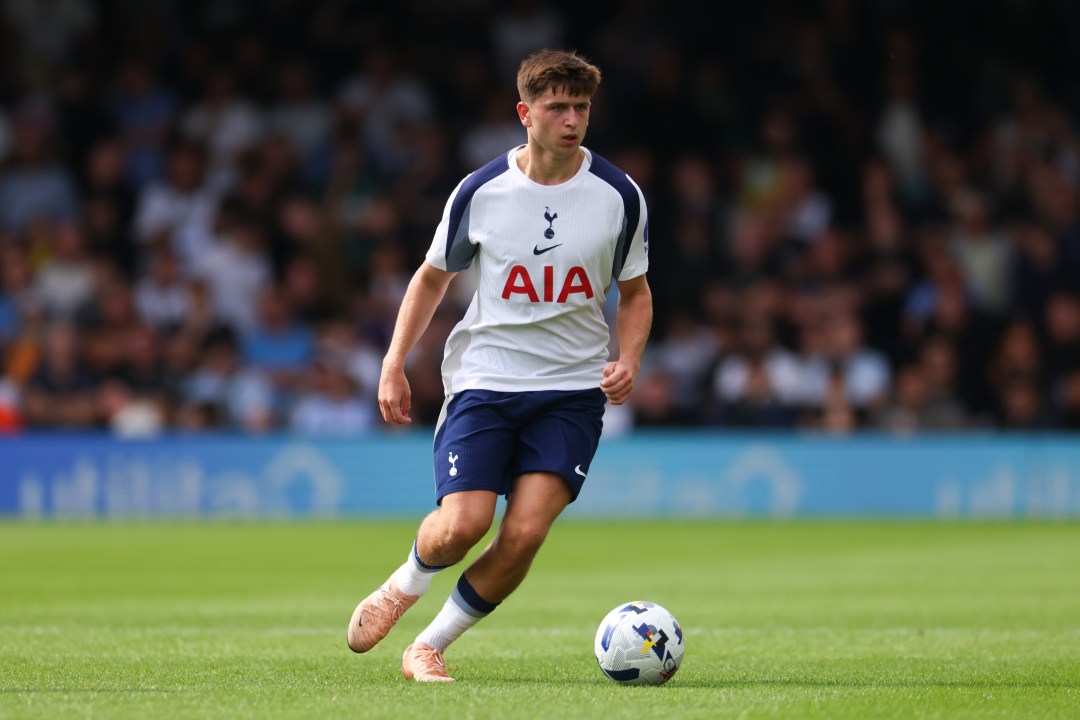
 admin
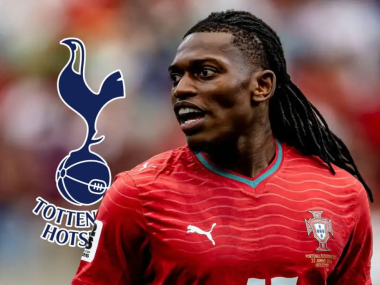
adminDONE DEAL: Mikey Moore heads to Rangers on loan
For much of the summer transfer window, Rangers fans allowed themselves to dream of a joyous reunion. Mikey Moore—the Tottenham teenager who electrified Ibrox during his previous loan spell—seemed to be inching closer to a return to Govan. Talks were reportedly underway, personal connections to the club were cited, and those close to the situation radiated genuine optimism. Instead, that hoped-for comeback has soured into disappointment, with Moore now on the verge of a season-long loan to Bundesliga side 1. FC Köln rather than a return to Scotland.
This transfer saga has dragged on for nearly two months, swinging between rejuvenated hope and growing exasperation for Rangers as they competed with clubs from multiple leagues for one of English football’s most highly touted young prospects. Ultimately, the allure of regular first-team football in one of Europe’s “big five” leagues appears to have been the deciding factor—a pull that Rangers, despite their history with the player and the affection he enjoyed during his time in Glasgow, were simply never equipped to counter.
A Look Back at Moore’s Rangers Tenure
To grasp why Rangers pursued Moore so relentlessly this summer, it’s worth revisiting the impact he had during his first stint at Ibrox. Moore delivered a standout campaign, making 47 appearances across all competitions, netting seven goals—including one in the Old Firm Derby—and being named the Scottish Premiership’s Young Player of the Season. That’s an exceptional return for a teenager away from home for the first time, and it explains why his name immediately shot to the top of Rangers’ wish list as soon as speculation stirred about his next destination for the 2026-27 season.
Even before his move north, Moore’s ascent through Tottenham’s ranks had been meteoric. The winger progressed through Spurs’ youth system from age seven, debuting for the Under-21s at just 15, before making his senior debut against Manchester City—becoming Tottenham’s youngest-ever Premier League player at 16 years and 277 days. His European debut followed shortly after in a 3-0 Europa League win over Qararat, and at 17 years and 77 days, he became the club’s youngest league starter since 1993.
He arrived at Ibrox last summer as Rangers’ eighth signing of that window, joining on a straight season-long loan with no purchase option. The deal, pending international clearance due to his age, made him one of several new arrivals under then-manager Russell Martin, and he quickly made his presence felt in Scottish football. Upon completing the move, Moore spoke of the deep personal significance the club carried for him: “I’ve always loved Rangers as a club. My family have always loved them,” he told the Ibrox club’s official website, adding that “with the new boss and the way that we play, it’s a great place to be at the minute.”
That kind of bond—forged over a season in which he became a regular starter and a firm fan favourite—is precisely why Rangers’ pursuit of a second loan felt, for a stretch this summer, like it might be simpler than most transfer chases involving a player of Moore’s stature.
An added twist to the saga came while Moore was still on loan at Rangers: he signed a new long-term contract with Tottenham on his 18th birthday—a strong show of faith from his parent club that simultaneously locked down his future in north London while leaving the more immediate question of his next season unresolved. By that point, Moore had made 21 senior appearances for Spurs, including becoming the youngest player to start a Premier League match for the club since Stephen Carr in 1993, and scoring his first senior goal against Elfsborg during Tottenham’s Europa League campaign.
With his long-term future secured, attention pivoted entirely to where he would spend the upcoming season. Early summer reports painted a picture that seemed to favour Rangers. They were said to have received renewed hope of sealing a second loan deal for Moore, with the option of him becoming a first-team regular at Tottenham still alive for his parent club. Meanwhile, significant interest from the Bundesliga and Eredivisie was also emerging, with PSV Eindhoven, Borussia Dortmund, and Köln all mentioned, and Tottenham reportedly turning down an approach from Ipswich Town.
Encouragingly for those at Ibrox, reports also indicated Moore himself retained a soft spot for a return. Former Aberdeen chief executive Keith Wyness suggested Moore still had strong “personal links” at Ibrox that could pave the way back, noting the player might prefer the “easier” option of rejoining Rangers for another season given his familiarity with the environment and teammates. Sources close to the player confirmed he had loved his time in Glasgow, formed tight bonds with several squad members, and was even holidaying with them over the summer—including fellow Rangers youngster Bailey Rice—with the 18-year-old reportedly keen on a return, viewing Ibrox as the ideal setting to further his development.
Where the Deal Started to Unravel
Despite that promising early outlook, cracks in Rangers’ pursuit began to appear as the summer dragged on. Tottenham manager Roberto De Zerbi made it clear he wanted Moore to continue his development away from north London this season, but didn’t see a regular first-team role for him at the club—while it became understood that the player himself had set his sights on a move to a top-five European league. That stated preference immediately complicated Rangers’ chances, given the Scottish Premiership falls outside that bracket under UEFA’s classifications.
Standard Sport reported that Championship side Middlesbrough were among the interested parties, though they weren’t considered frontrunners because of Moore’s desire for a higher level of football—a stance that put more pressure on suitors to offer that platform, while still not formally ruling out Rangers at that point. Even so, the Scottish Premiership also lay below the standard the teenager was believed to be targeting, leaving the Light Blues trailing alternatives elsewhere, even if they hadn’t been completely eliminated from the race.
Around the same period, reports suggested that Moore might not have remained Rangers’ absolute top priority within their own recruitment plans. One source indicated that while Derek McInnes still admired Moore, other wide players were being prioritised at that stage, with suggestions that the Ibrox club might be better served advancing alternative targets rather than waiting on a late change of heart from the player.
McInnes himself, speaking after a 1-1 draw with Dundee United that exposed his side’s lack of penetration and pace out wide, aired his broader frustrations publicly, even without addressing Moore’s specific situation. He confirmed the squad would look markedly different by the end of the transfer window, stating: “We’re still fighting to get good options in. I think the squad will look a lot different once the window closes. We’re still working hard on trying to get the right additions in. Clearly we could do with a wee bit of help in there.” Elsewhere, it was reported that McInnes had “begged the Ibrox board to act quickly” following that Dundee United draw, with the team’s shortage of pace and directness out wide pinpointed as a pressing concern.
Köln Emerges—and Wins the Race
As August wore on, the trajectory of the Moore saga became increasingly clear—and increasingly unfavourable for Rangers. The London Standard indicated that Moore had fixed his sights on a loan to a big-five European league and was poised to overlook Championship side Middlesbrough as he took the next step in his development, with growing expectation that his immediate future lay away from Tottenham—but also away from Scotland.
That expectation was ultimately confirmed. Reports indicated a straight loan to Köln, with no purchase option, was all but sealed, with the player expected to arrive in North Rhine-Westphalia within the week. One report stated plainly that hopes of Rangers re-signing Moore for another season could “finally be closed,” adding that he would be “remembered fondly” at Ibrox but that all parties were now parting ways—an understandable outcome given Spurs’ wish to see him tested at a higher level on a weekly basis. Further reporting confirmed that 1. FC Köln had reached a full agreement with Moore, with a verbal deal in place with Tottenham as final details were ironed out.
For a Rangers recruitment department that had, by their own manager’s admission, been battling hard all window to bring in the right reinforcements, missing out on a player with such a proven track record in Scottish football and such evident personal affection for the club will be a genuine blow—even accepting that a move to a true top-five European league was always likely to hold greater appeal for a player of Moore’s obvious ability and ambition, regardless of the fondness he retained for his time north of the border.
From a pure career-development perspective, Moore’s decision is easy to understand. The Bundesliga has an established reputation as one of Europe’s premier destinations for nurturing young talent, offering a level of competitive intensity, technical quality, and public scrutiny that more closely mirrors what Tottenham will ultimately expect him to handle should he establish himself in their first team. A loan to Köln gives Moore the chance to test himself against senior professionals in one of the continent’s elite leagues—a vastly different proposition from a second season in a league he has already conquered as its outstanding young performer.
There’s also a footballing logic tied to the timing of his development. Having already earned individual recognition and proven capable of performing consistently well above the typical teenage loanee level in Scotland, another season in the same league—however comfortable and familiar—arguably offered diminishing returns for his continued growth. Tottenham’s willingness to sanction a move to Germany, rather than pushing for a return to Ibrox or exploring a Championship switch, reflects a parent club taking an active, considered approach to where their asset is best served developing next, rather than simply opting for the path of least resistance.
None of that is likely to soften the blow for Rangers supporters who watched Moore establish himself as one of the most exciting young talents to represent the club in recent seasons, nor for a coaching staff who clearly viewed a reunion as a genuine, practical solution to a well-documented shortage of pace and directness in wide areas.
What Comes Next for Rangers?
With the door now firmly closed on a Moore reunion, attention turns to how Rangers plan to address the very problem his return might have solved. McInnes’s comments after the Dundee United draw made clear that reinforcements in wide areas remained an active priority regardless of the Moore situation, and with that specific avenue now shut, the pressure on the club’s recruitment department to identify and secure an alternative before the transfer window slams shut only intensifies.
The broader context of Rangers’ summer business is relevant here too. The club has been highly active under McInnes, bringing in a significant number of new faces across multiple positions, but the specific issue of pace and penetration from wide areas—the exact quality Moore brought to such devastating effect last season—appears unresolved as things stand. Whichever direction the club now turns, replicating the particular blend of directness, end product, and Scottish Premiership pedigree that Moore offered will be no simple task.
A Fond Farewell
Whatever frustration accompanies Rangers’ failure to secure a second season with Moore, there should be little bitterness in how this chapter closes. The teenager’s original loan spell at Ibrox was, by any reasonable measure, an outstanding success—for the player, who established himself as one of the most eye-catching young talents in Scottish football and earned individual recognition to match; for Rangers, who benefitted from his goals, energy, and willingness to take on defenders throughout a difficult campaign; and for Tottenham, who were able to monitor his development from a distance before making a considered decision on the next step in his loan pathway.
That pathway now leads to Germany rather than back to Scotland, but it doesn’t erase what came before. Moore’s time in Glasgow—the Old Firm goal, the Young Player of the Season award, the bonds formed with teammates that reportedly extended into shared summer holidays—will remain a fondly remembered chapter for the player himself and for a Rangers support who watched a teenager arrive with promise and depart, twelve months later, as one of the most talked-about performers to have graced Scottish football’s top flight in recent memory.
For Rangers, the search for his replacement in wide areas continues. For Moore, a new and by all accounts more demanding challenge awaits in the Bundesliga—one that will determine whether his rapid early development at Ibrox translates into sustained progress at an even higher level, and ultimately whether he can force his way into Tottenham’s first-team plans in the seasons to come.

 admin
admin