 admin
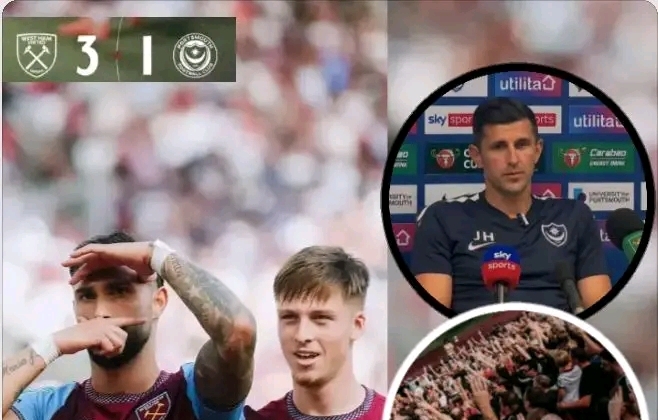
adminPortsmouth’s manager has issued an emotional response following his team’s latest clash with West Ham, alleging that a specific chant from the home crowd deeply unsettled one of his players, leaving him mentally struggling for nearly the entire match.
The Portsmouth boss was blunt in his criticism of the stadium atmosphere, admitting he was taken aback by what he heard from certain West Ham fans. Reports suggest the immediate reaction from the visitors’ bench was one of disbelief—reportedly along the lines of “WTF IS THAT CHANT?”—as the noise levels grew increasingly hostile.
In the manager’s view, the episode surpassed ordinary matchday rivalry. He insisted that his player was visibly impaired by the relentless taunting from the stands. Despite desperate efforts to stay composed, the player found himself shadowed by the chanting throughout the contest, with the mental toll lasting right up to the final whistle, according to the manager.
For Portsmouth, this has become an issue extending far beyond the pitch. The manager acknowledges that football fans are passionate and that ferocious atmospheres come with the territory. Nevertheless, he asserts that a boundary exists that must not be overstepped—especially when a player’s wellbeing and self-belief hang in the balance.
“He was trying to play football, but you could see something was getting to him,” the Portsmouth boss explained. “He kept trying to concentrate, but the noise never let up. It was really hard for him.”
These remarks have already ignited widespread debate among supporters. Opinions are split—some defend the West Ham faithful, arguing that football is an emotional sport and players must be ready for hostile settings. Others, however, side with the manager, believing he is justified in speaking out if the chanting turned personal or breached acceptable conduct.
The most contentious point is the claim that the player’s mental state was compromised from the first whistle to the last. Rather than a momentary distraction, the manager asserts that the episode weighed on the player’s mind for virtually the entire game. This has prompted deeper questions about supporters’ accountability when trying to unsettle opposition players.
The Portsmouth boss was careful to stress that he does not wish to drain passion from football. He knows that singing, shouting, and attempts to rattle opponents are integral to the sport’s appeal. Yet from his standpoint, there is a clear distinction between fostering an intimidating environment and purposefully singling out an individual in a way that could harm their psychological state.
The incident also created unease on the Portsmouth bench, with coaching staff reportedly growing increasingly agitated as the match wore on. The manager felt his player was forced to contend with an extra burden entirely unrelated to football—struggling not just with positioning and passing, but with persistent noise from the stands.
That seems to be what angered the Portsmouth boss the most. He argues that players should be evaluated purely on their on-field contributions, not subjected to treatment that might damage their confidence.
West Ham’s supporters, of course, are likely to view the episode differently. For many, fervent chanting is simply part of club allegiance, especially in high-stakes, emotionally charged matches. That explains why the manager’s comments have already generated a fierce reaction online. Some fans question how a professional could let crowd noise get under his skin, while others counter that outsiders cannot fully grasp the impact on the player involved.
The debate shows no sign of fading quickly.
Adding further controversy is the manager’s decision to go public instead of handling matters behind closed doors. By voicing his explosive reaction—“WTF IS THAT CHANT?”—he has ensured the incident will attract attention well beyond the stadium walls. Fans are now dissecting exactly what happened, whether the chanting overstepped, and if the player deserved greater protection from those around him.
For Portsmouth, the hope is that the player can move past the ordeal and recover his composure. Yet the manager’s stance is unmistakable: football should remain intense, loud, and daunting, but limits must still apply. And having asserted that one of his players was mentally affected from the moment the chanting began until the final whistle, the Portsmouth boss clearly believes those limits were breached.
Now, the football community awaits any response from West Ham supporters—because what started as just another boisterous afternoon has swiftly morphed into a major debate about where passionate fandom ends and unacceptable conduct begins.

 admin
admin