 admin
adminIn the pressure-cooker environment of international football, where every action is magnified under the global media microscope, Tottenham Hotspur defender Djed Spence has finally broken his silence on the controversy that erupted after England’s 2026 World Cup meeting with Ghana.
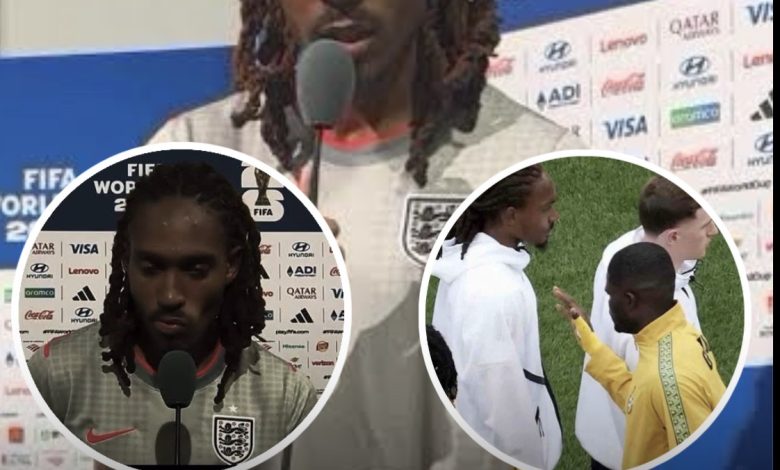
The incident occurred during the pre-match handshakes before a tense 0-0 draw in Boston, when Spence appeared to intentionally snub Ghanaian midfielder Thomas Partey.
Following weeks of gossip, outrage, and relentless press attention, Spence has now offered a short but impactful response—widely viewed as a candid, nine-word reflection on integrity and staying true to one’s beliefs.
ESPN
Spence shared the message on Instagram alongside matchday photos, and it has since been picked up and dissected across media platforms. Often condensed in tabloid coverage as a bold statement of personal principle, the core of the message revolves around “BELIEVE” as a central theme—expanded in context to affirm standing by what feels morally right.
This minimalist reply has triggered fierce debate across football circles, social media, and beyond, touching on issues of player autonomy, the collision of sport with serious legal matters, and shifting standards of professionalism in the modern game.
The match itself proved a cautious affair, finishing scoreless and leaving England supporters frustrated while underscoring Ghana’s defensive resilience. Harry Kane went closest late on, but neither side could find a breakthrough. The true flashpoint, however, occurred before kickoff.
As the teams lined up for the customary handshakes, footage captured by fans and quickly shared online showed Spence with his hands in his pockets as Partey approached. While other England players exchanged handshakes or fist bumps, Spence appeared to deliberately bypass the Ghanaian vice-captain.
This was no ordinary opponent. Thomas Partey, formerly of Arsenal and now with Villarreal, is embroiled in serious UK legal proceedings. He faces multiple charges, including seven counts of rape and one of sexual assault, related to allegations from several women between 2020 and 2022.
Partey has pleaded not guilty to all charges and is set for trial in 2027, with his lawyer emphasizing his determination to clear his name. Despite the ongoing case, Partey was named in Ghana’s World Cup squad, prompting pre-tournament discussions about selection ethics, eligibility, and the presumption of innocence.
England’s Football Association reportedly gave players no specific instructions regarding interactions with Partey, focusing instead on football matters.
Yet the symbolism of the handshake line—or its absence—was impossible to ignore. Social media erupted with sharp divisions: some applauded Spence for taking a principled stance against engaging with someone facing grave allegations, while others condemned the move as unprofessional, prejudicial, or contrary to the sport’s tradition of mutual respect.
Ghanaian supporters and analysts voiced anger, seeing it as a slight against both their player and their nation.
Partey himself faced boos from sections of the England crowd whenever he touched the ball, intensifying an already charged atmosphere. Neither player addressed the moment immediately after the game, and the FA remained silent on the specifics.
Who Is Djed Spence? A Rising Talent with a Quiet Conviction
Born on August 9, 2000, in Kensington, London, Djed Spence has established himself as one of English football’s most exciting full-back prospects.
Standing at 1.84m, the versatile defender can operate on either flank, though he has mostly featured at right-back for both club and country. His path began in Fulham’s youth system before a move to Middlesbrough, where his performances earned him a transfer to Tottenham Hotspur.
At Spurs, Spence has competed for playing time under several managers, including a key loan spell that highlighted his attacking drive and defensive reliability. His selection for England’s World Cup squad under Tuchel reflected his rising stock on the international scene.
During the tournament, Spence started at left-back against Ghana, playing 66 minutes before being substituted, and later featured in other matches while wearing a protective jaw brace following an earlier injury.
Known off the pitch for a reserved nature, Spence rarely courts headlines, preferring to let his football do the talking. This makes his apparent snub—and the subsequent social media post—all the more striking. It paints a picture of a player willing to act on personal principles, even at the cost of public controversy.
The Statement That Ignited Worldwide Discussion
After weeks of silence, allowing speculation to mount, Spence turned to Instagram. His post featured a carousel of matchday images, accompanied by the bold word “BELIEVE.”
In the footballing discourse, this has been interpreted and expanded as part of a broader, honest declaration—often headlined as a nine-word affirmation of moral clarity and self-trust amid adversity.
Whether read literally as “I believe in standing for what’s right” or inferred from the imagery and timing, the sentiment resonated powerfully.
Supporters saw it as Spence reinforcing his decision: prioritizing personal boundaries and values over convention. Critics dismissed it as vague, passive-aggressive, or an unnecessary attention-grab.
The post quickly amassed thousands of responses, and pundits across talk shows, podcasts, and columns weighed in with their takes.
This was never just about one handshake. It opened a wider conversation: How should sport handle players facing serious criminal allegations? Where does the presumption of innocence sit alongside individual conscience?
Should football remain a neutral space, or must it reflect broader ethical standards? Spence’s sparse message amplified these questions without offering a full manifesto, leaving observers to fill in the gaps with their own perspectives.
Reactions from Every Angle
Responses were predictably mixed. Many England fans and women’s rights advocates praised Spence for showing solidarity with alleged victims, pointing to the gravity of the charges against Partey. Social media accounts focused on accountability shared clips lauding the defender’s “integrity.”
On the other hand, Ghanaian media and supporters condemned the act as disrespectful and premature judgment. Football traditionalists stressed that the pitch should be a sanctuary, free from politics and personal matters.
Former players and managers debated whether such actions undermine team harmony or establish questionable precedents. Thomas Tuchel and the England camp offered no public comment, keeping their focus on tournament performance.
Observers internationally noted similar dilemmas emerging elsewhere in the World Cup, highlighting how governing bodies like FIFA and national associations handle such cases inconsistently.
Wider Impact on Football and Society
Spence’s gesture and subsequent statement arrive at a pivotal moment for football.
The sport has faced growing demands for a consistent approach to off-field issues, from racism and discrimination to domestic abuse and sexual misconduct. High-profile cases have led to bans, education campaigns, and policy updates, yet gray areas persist, especially before convictions.
The Ghana episode exposes the tension between the legal “presumption of innocence” and public opinion. Legally fundamental, it doesn’t always mesh with personal ethics or social media’s instant judgment. Spence, through his actions and brief message, appeared to prioritize the latter.
For younger players, this offers a case study in authenticity. In an era of polished personas and sponsor-friendly neutrality, Spence’s approach—quiet action followed by a simple statement of belief—stands out. It may encourage others to reflect on their values, though it also carries risks of career repercussions.
From a footballing standpoint, the controversy didn’t derail England’s campaign. They advanced from the group stage, with Spence contributing reliably. Ghana, despite the draw, kept their progression hopes alive. Yet the story overshadowed the actual football for days.
Looking Forward: Legacy and Lessons
As the 2026 World Cup progresses and Partey’s legal case looms, Djed Spence’s concise message may be remembered as a moment when a player navigated a complex moral landscape with quiet defiance.
It wasn’t a press conference or a viral rant; it was personal, understated, and open to interpretation—much like Spence himself.
Football will inevitably move on, with new fixtures and new controversies. But the issues raised—about consent, accountability, respect, and conviction—endure. Spence has reminded us that even in a 90-minute contest, the moments before kickoff can shape how we remember a player.
By breaking his silence in this manner, Djed Spence did more than address one incident; he sparked a global conversation about what it means to believe in something beyond the game.
Whether one agrees with his stance or not, the honesty of that simple post compels reflection. In a sport often accused of valuing spectacle over substance, this stands as a rare, principled moment.
The football world will watch closely to see how Spence’s career develops after the tournament. Will this enhance his reputation as a player of integrity, or will it draw persistent scrutiny? Only time—and further actions on and off the field—will reveal the answer. For now, his message lingers: a call to believe, whatever that means to each person who hears it.


 admin
admin