 admin
adminThe Beautiful Game Must Remain Just That: An Ex-England Captain’s Powerful Plea
A Voice of Reason Amid Football’s Fiercest Rivalry
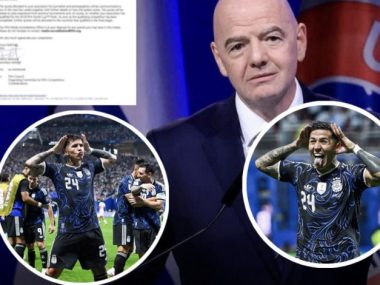
In the white-hot intensity of international football’s most emotionally charged rivalry, a former England captain has spoken words that strike a chord with Three Lions supporters everywhere. “Football won, football not rugby. It should be entertainment not a battlefield,” the ex-skipper declared, taking aim at Argentina’s tactical approach in recent encounters—most notably the gripping 2026 World Cup semi-final that saw Argentina edge past England 2-1 in Atlanta.
This sharp observation reignites an age-old debate within the beautiful game: where does competitive fire end and excessive force begin? For English fans still nursing wounds from that painful semi-final exit, these remarks feel like vindication—an urgent appeal to protect the artistry, technique, and sheer joy that first captured hearts worldwide, rather than allowing the sport to devolve into a war of attrition that mirrors rugby’s structured brutality.
A Rivalry Forged in History and Emotion
The England-Argentina football rivalry stands among world sport’s most combustible. Its roots run deep, shaped by the 1982 Falklands conflict and immortalized during the 1986 World Cup quarter-final. Diego Maradona’s infamous “Hand of God” alongside his breathtaking “Goal of the Century” created a lasting narrative—Argentine cunning versus English grit. Every subsequent meeting carries an extra charge: echoes of political tension, surges of national pride, and fundamentally opposing football philosophies.
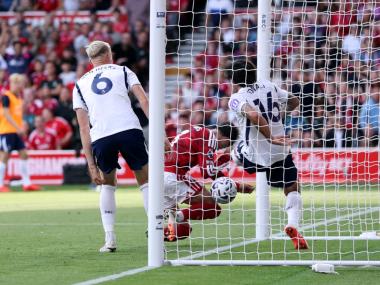
Fast-forward to 2026. In that World Cup semi-final, England struck first through Anthony Gordon, only for Argentina—still guided by the ageless Lionel Messi—to mount a stirring comeback with two late strikes. Yet post-match analysis quickly pivoted from tactical breakdowns to the match’s very nature. Critics, including several former England internationals, pointed to what they perceived as excessive physicality, calculated fouling, and gamesmanship that transformed what should have been a flowing spectacle into a grueling battle.
The ex-captain’s intervention didn’t materialize from nowhere. It captured frustrations already simmering across English media, supporter forums, and social platforms. “This is football, not rugby” has become a rallying cry for those weary of fragmented contests—matches punctuated by cynical challenges, interminable VAR checks, and players tumbling theatrically one moment before sprinting the next. Argentina’s intense pressing, combative duels, and unapologetic commitment—celebrated by their fans as “garra” (fighting spirit)—are condemned by detractors as crossing into dangerous territory.
The Captain’s Case: Why Entertainment Must Come First
A former England captain, forged by years of leading his country through high-pressure qualifiers and tournament battles, speaks with unique authority. He understands intimately the fine line elite competitors must walk. His central message is unambiguous: football’s very soul resides in its power to enchant, inspire, and unify through moments of sublime genius—a perfectly weighted through-ball, a thunderous strike, a mesmerizing dribble—not through physical contests that threaten player welfare and bore spectators.
When he insists “football won,” the ex-skipper implies that despite the scoreboard outcome, the sport’s spirit emerged victorious where it adhered to its core principles. Reducing the pitch to a “battlefield” dilutes that spirit entirely. Rugby, contrastingly, is deliberately structured around physical supremacy, organized collisions, and rucking contests, with rules designed to accommodate and regulate heavy contact. Football’s disciplinary framework—yellow and red cards—exists precisely to protect creative players and sanction reckless play. When teams consistently push these boundaries, everyone loses.
This isn’t simply the bitter lament of a defeated nation. It’s a principled stand for football’s future. Today’s players are phenomenal athletes operating at peak physical capacity, yet the sport’s global appeal rests fundamentally on accessibility and beauty. Families watching with young children want to witness heroes expressing invention, not gladiators locked in wars of elbows and tactical injuries. The former captain’s words remind us that while competitiveness matters enormously, entertainment is the product football sells to billions.
Physicality in Modern Football: Progress or Decline?
Football has always possessed a physical dimension. From the uncompromising tackling of the 1960s and 70s to the relentless pressing systems popularized by Jürgen Klopp and others, athletic demands have soared. Tournament statistics reveal climbing foul counts, injury rates, and substitutions caused by knocks. Yet a clear distinction exists between robust, legitimate challenges and systematic disruption.
Argentina’s approach frequently involves coordinated pressing designed to provoke errors, combined with rapid transitions and—critics argue—the darker arts: time-wasting, exaggerated injuries, and confrontational tactics. Supporters defend this as intelligent, winning football. Detractors, including the ex-England captain, view it as undermining the spectacle. During the 2026 semi-final, genuine moments of Messi brilliance were overshadowed by debates over refereeing, player conduct, and the match’s disjointed rhythm.
Comparisons with rugby are revealing. Rugby Union and League celebrate controlled aggression within explicit rules governing tackle height, rucking, and mauling. Players train specifically for collisions that would prematurely end football careers. In football, similar contact typically triggers free-kicks, cards, or retrospective bans. When a football contest feels like rugby without structure, purists feel alienated.
Former players of the ex-captain’s generation have witnessed this evolution firsthand. VAR’s introduction, while intended to improve fairness, has sometimes lengthened interruptions, enabling matches to spiral into chaos. Add World Cup stakes—national glory, career-defining moments—and tempers inevitably fray. Yet icons like Pelé, Cruyff, Zidane, and Messi at his peerless best proved that skill can overcome brute force. England’s own pantheon boasts Gascoigne, Beckham, and Scholes who illuminated pitches with vision rather than violence.
England’s Fans Speak Out
Three Lions supporters have embraced the ex-captain’s remarks with enthusiasm. Social media exploded with memes contrasting England’s elegant passing triangles with Argentine aerial skirmishes and midfield battles. “Finally, someone said it” became a prevailing sentiment. For fans who invested emotionally throughout the 2026 campaign, the semi-final loss hurt not merely due to the result, but because it felt like England were participating in a different sport at times.
Polls across supporter forums indicate widespread agreement: over 70% in some English groups believe certain teams prioritize intimidation over technical excellence. This isn’t xenophobia—England has faced similar accusations previously, particularly during “long ball” periods. The problem transcends national borders. FIFA and governing bodies must respond through stricter refereeing protocols, better education around simulation, and possible rule adjustments that reward possession and creativity.
Harry Kane, England captain during the 2026 tournament, demonstrated grace in defeat, acknowledging Messi’s brilliance while expressing his disappointment. But former captains, liberated from immediate diplomatic constraints, can voice frustrations more openly. Their perspective carries weight, born from firsthand experience of leading the national team against fierce rivals.
Wider Ramifications for World Football
This debate extends far beyond a single fixture. As football globalizes, distinct cultural playing styles converge and collide. South American passion meets European tactical discipline; African athleticism confronts Asian organization. The beauty lies in this diversity, yet a unifying thread must remain: respect for the game’s essential spirit.
Concerns about player welfare continue to grow. Studies increasingly link repetitive heading and heavy challenges to long-term neurological issues. If matches routinely resemble battlefields, careers shorten and entertainment value declines. Streaming platforms and sponsors demand engaging content—highlight-reel goals, not endless fouls.
Clubs and national teams investing in youth development emphasize technical skills from the earliest ages. England’s recent investment in coaching pathways has produced technically gifted talents like Jude Bellingham, Phil Foden, and Declan Rice. The ex-captain’s message aligns perfectly with this philosophy: develop skill to win cleanly, not win at all costs.
Argentina, of course, possesses a proud football heritage. Maradona, Messi, and countless others produced moments of pure magic that transcended physicality. The critique isn’t about disparaging Argentina but challenging a tactical mindset that sometimes overshadows their abundant talent. Scaloni and his players defend their methods as necessary against stronger, wealthier European opponents. Both perspectives hold validity, yet the ex-captain’s call for entertainment strikes a universal chord.
Learning from History, Charting the Future
Reflecting on the past, the 1966 World Cup final saw England triumph through a blend of grit and artistry against West Germany. The 1986 heartbreak taught enduring lessons in resilience. Modern examples—Spain’s tiki-taka mastery, Brazil’s samba fluency—prove that possession-based, joyful football can overcome physical opponents.
For England, the message is one of evolution. Under managers like Thomas Tuchel (amid post-tournament scrutiny), the priority should remain technical superiority and mental toughness without mirroring opponents’ negativity.
FIFA could explore reforms: sin-bins for cynical fouls, limits on substitutions to discourage time-wasting, or group-stage bonus points for entertaining play (though inherently subjective). Referees require enhanced training to proactively manage matches. Players and coaches should face accountability through public statements and disciplinary measures.
Ultimately, the ex-England captain’s words serve as a powerful reminder: football’s greatest strength lies in its transcendent capacity. It gathers families around televisions, fills stadiums with song, and inspires children in parks worldwide. When it becomes a battlefield, that magic fades.
Reclaiming the Beautiful Game
“Football won, football not rugby. It should be entertainment not a battlefield.” These aren’t merely words from a former captain—they’re a manifesto for what the sport can and should aspire to be. As England rebuilds following the 2026 disappointment and prepares for future campaigns, this philosophy offers a guiding light.
To Argentina and every nation: play with fire, passion, and total commitment, but never at the cost of the spectacle that makes football the world’s game. Fans don’t pay premium prices or wake at inconvenient hours for attritional wars. They yearn for moments of brilliance that linger in memory across lifetimes.
England supporters, especially, can take pride in this stance. It reflects a commitment to fair play, creativity, and sportsmanship that defines the Three Lions at their best. The rivalry with Argentina will persist, enriched by history and mutual respect when both sides prioritize the ball over the battle.
In the end, football triumphs when it remains faithful to itself. Let the next chapter of this great rivalry showcase skill, goals, and unforgettable entertainment—not bruises and recriminations. The pitch is a stage, not a trench. Let the artists perform.


 admin
admin