 admin
adminHome Again: Why Ross McCrorie Chose Rangers Over England
Some transfers arrive with fanfare and flashing lights. Others just feel destined to happen once you grasp the connections behind them. Ross McCrorie’s return to Ibrox falls squarely into that second group.
At 28, the defender didn’t need a slick sales pitch, a cinematic unveiling, or a transfer tug-of-war to decide where his future lay. All it took was one call, a familiar voice, and a manager he already trusted implicitly.
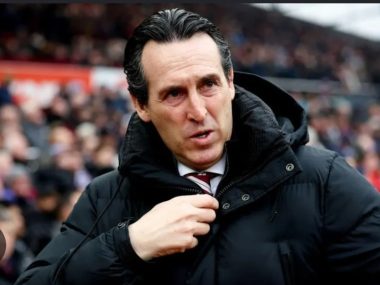
That manager is Derek McInnes, and you can’t tell the story of McCrorie’s homecoming without him. This isn’t merely a player rejoining the club he supported as a boy.
It’s the next chapter in a working relationship that has already reshaped McCrorie’s career once—and one that both men now hope can achieve something far greater: restoring Rangers to the level its supporters believe is their due.
Rangers confirmed the deal with a brief statement, announcing McCrorie had penned a three-year contract with an option for an additional season. The transfer, completed from Bristol City—the Championship side he’d represented since leaving Aberdeen—was subject to the usual international clearance required for such cross-border moves.
For a player who came through Rangers’ academy and made his first-team debut back in September 2017, there’s an undeniable poetry to the move. But symmetry alone doesn’t explain why a 28-year-old defender with Championship pedigree and interest from elsewhere in England chose to head back to a Scottish club that, by its own admission, has underperformed against its historic standards in recent years. To grasp that decision, you have to look at the man who first persuaded McCrorie to walk out the door.
The McInnes Factor
Long before Derek McInnes took the reins at Ibrox, he was McCrorie’s boss at Aberdeen—a partnership spanning three seasons that clearly left an indelible mark. McCrorie has been unusually candid about how that period shaped him, describing McInnes as the single most important factor in his latest career choice.
“The biggest thing for me was the gaffer,” McCrorie said of the move, explaining that despite multiple offers to stay in England, his mind was effectively made up the moment he learned McInnes had landed the Rangers job.
It’s the kind of remark that could easily be dismissed as post-signing diplomacy—the standard player-speak that oils the wheels of a transfer announcement. But the history between the two men suggests otherwise.
McCrorie’s portrayal of his former and current manager paints a picture familiar to anyone who’s followed Scottish football closely over the past decade.
He calls McInnes a “great man-manager” and “a real leader”—language that goes beyond generic praise and points to something more specific: a coach who builds belief in individuals as much as he builds shape and structure in a team.
McCrorie went further, saying of McInnes that “he makes you want to run through brick walls for him”—the kind of offhand remark that, in football, usually signals genuine respect rather than rehearsed pleasantry.
That respect appears rooted in a pivotal moment in McCrorie’s career. Back in 2020, having established himself as a first-team player at Ibrox with over 50 appearances, McCrorie decided to leave Rangers in search of regular football.
It was McInnes, then managing Aberdeen, who both encouraged that move and ultimately made it happen—reportedly driving to McCrorie’s house in person to sell him on a switch to Pittodrie.
“The gaffer was the one who gave me that belief to step up and leave Rangers,” McCrorie recalled, reflecting on a period where ambition outweighed comfort. He wanted, in his own words, to become “the main man”—someone clocking consistent first-team minutes rather than jostling for position in a crowded Rangers squad. It’s a natural instinct for any young player who feels ready for more responsibility than his current environment can offer, and Aberdeen under McInnes provided exactly that stage.
Life After Ibrox: Aberdeen and Bristol City
The move north proved transformative. McCrorie made 115 appearances for Aberdeen—a substantial body of work that included spells across multiple positions, a versatility that would come to define much of his career. He was trusted enough during his time at Pittodrie to wear the captain’s armband on occasion, a detail that speaks to the dressing-room standing he built over those three years.
By 2023, McCrorie had outgrown Aberdeen in the way ambitious players often do, and a move to England followed. Bristol City took him to the Championship, English football’s fiercely competitive second tier, where physical demands and squad depth present a very different test to the Scottish Premiership.
It was, by most accounts, a useful and steady period in his development—one that added another layer of experience to a player who was no longer the raw teenager who had left Ibrox for Pittodrie.
It’s worth pausing on the significance of that spell in England, because it directly informs the decision now being made. McCrorie wasn’t short of options when this summer’s window opened.
There were, in his own words, “a good few offers in England” on the table before Rangers ever became the obvious destination. Staying in the Championship, or perhaps aiming higher within the English pyramid, was a live possibility. Instead, the pull of Ibrox—and more specifically, the pull of playing for McInnes again—proved decisive.
That’s a meaningful data point for Rangers. It suggests the club still carries enough weight, and McInnes still carries enough credibility as a manager, to draw players away from stable, well-paying situations in English football.
In an era where Scottish clubs frequently lose their best talents to England rather than the other way around, a move in the opposite direction is worth noting.
A Defence in Need of Reinforcement
None of this context would matter much if Rangers didn’t have a specific, pressing need for what McCrorie offers. And they do. Last season, Rangers scored freely enough in the Premiership, but their form at the other end told a very different story.
The club conceded more goals across the league campaign than direct rivals Celtic, along with both Hearts and Motherwell—a statistic that, for a club of Rangers’ size and history, is difficult to spin as anything other than a genuine problem.
That defensive fragility goes a long way toward explaining the recruitment pattern Rangers have pursued this summer. McCrorie’s arrival sits alongside the signings of centre-back Ben Godfrey and goalkeeper Ivor Pandur—two additions clearly aimed at shoring up a backline that let the side down repeatedly last term.
Bringing in a defender who is versatile enough to play in multiple positions, comfortable with responsibility, and—crucially—accustomed to the specific pressures of playing for Rangers, looks like a deliberate attempt to fix a defined weakness rather than simply add squad numbers for the sake of it.
It’s also worth remembering that McCrorie isn’t walking into an unfamiliar dressing room the way a typical overseas signing might. He already understands what’s required at Ibrox: the scrutiny, the weight of expectation attached to every result, and the demand for consistency that comes with representing one of Scottish football’s two dominant institutions. That familiarity isn’t something money alone can buy, and it’s likely to matter as much as any tactical attribute in his first months back at the club.
Confronting Rangers’ Recent Trophy Drought
McCrorie hasn’t tried to dress up Rangers’ recent history in flattering terms, and that honesty is itself notable. Since he left the club in 2020, Rangers have won only three trophies—a return that falls well short of what a club with their resources and history is built to deliver, particularly with Celtic dominating domestic competition for large stretches of that period.
“Watching as a fan, there’s no getting away from it, it’s not been good enough,” McCrorie said—a comment that doubles as both an admission and a statement of intent. He went on to frame his own role in fairly direct terms: helping to “create the standards that it takes to make Rangers successful.” That’s no small ambition, and it will be tested immediately given the demands of Scottish football’s most scrutinised fixture list.
It’s also a sentence that tells you something about how McCrorie sees his own signing—not simply as a return home, but as part of a broader rebuilding effort. Rangers have spent recent seasons hearing about potential, about promising performances that don’t translate into silverware, about a squad that looks the part in isolated matches but lacks consistency across a full campaign. McCrorie’s language suggests he understands that pattern needs breaking, not managing.
McInnes: Demanding, Detailed, and Direct
If McCrorie’s return is partly an act of loyalty to his former manager, it’s also a vote of confidence in what McInnes represents as a coach—someone whose knowledge of the Scottish game runs deep and whose standards, according to McCrorie, are non-negotiable.
“He knows the league inside and out,” McCrorie said of his manager, before adding a phrase that could double as a mission statement for the season ahead: “He’s all about standards.” For a club that has, in McCrorie’s own assessment, fallen short of its own bar for half a decade, appointing—and then reinforcing with familiar faces—a manager built around exactly that word suggests a clear philosophy from the Ibrox hierarchy.
McCrorie’s framing of what it means to compete for Rangers is uncompromising. “If you play for Rangers, any competition you’re in, you want to win,” he said. “That’s the target. It’s all about winning. You have to live and breathe it.” It’s the kind of statement that will resonate strongly with supporters who have watched cup exits and inconsistent league form chip away at patience over recent seasons. Whether that mentality translates into results on the pitch is, of course, an entirely different question—but as a starting point for a returning player’s public messaging, it leaves little room for ambiguity about what is expected.
Reinforcements Beyond the Backline
McCrorie isn’t walking into a rebuilding project alone. Alongside the defensive additions of Godfrey and Pandur, Rangers have also brought in Lawrence Shankland and Dan Neil—two players who add both quality and personality to a squad clearly being reshaped with more than one attribute in mind. It’s a recruitment drive that appears to be targeting both technical improvement and, in less tangible terms, character—the kind of dressing-room presence that can help stabilise a group during difficult runs of form.
McCrorie himself was keen to stress that this second quality matters just as much as the first. “It’s not just about quality, it’s about character as well,” he said, before outlining in more detail what he believes the squad needs to develop collectively: “We need to have that ruthless edge to us.” It’s a phrase that speaks to a particular kind of football maturity—the ability to close out games that are there to be won, rather than allowing standards to slip once a lead has been established or a match becomes tight.
He continued in a similar vein, describing the mentality he believes Rangers require if they are to close the gap on their domestic rivals: “You need to have that quiet confidence that you match anyone on the day.” That’s a notable choice of words—not brash confidence, not noise, but something calmer and more internal. It suggests McCrorie sees the current Rangers squad’s issue as much a psychological one as a tactical or technical one—a team that needs to genuinely believe it belongs at the top of the table rather than simply saying so in pre-season interviews.
Finally, McCrorie pointed to the unity within the group as a factor that could make a tangible difference over the course of a long season. “You need to create unity,” he said. “That brotherhood in the changing room can go a long way.” It’s a sentiment often repeated in football, sometimes to the point of cliché, but coming from a player returning specifically because of his relationship with his manager, it carries a little more weight than it might from someone else.
What Rangers Need Now
Put together, McCrorie’s comments sketch out a fairly clear picture of what he—and by extension, McInnes—believe Rangers have been missing. Not simply better individual players, though the summer’s transfer business suggests an obvious upgrade in specific defensive areas. Not simply a change of manager, though McInnes’ appointment and his subsequent recruitment of familiar, trusted faces indicates a clear philosophical shift. What McCrorie describes, again and again, is something more structural: standards, discipline, unity, and the mental toughness to see out matches under Scottish football’s uniquely intense spotlight.
Rangers supporters have heard versions of this messaging before, of course, and enthusiasm alone has rarely been enough to bridge the gap to Celtic or to end the trophy drought McCrorie references so candidly. What may set this window apart is the coherence of the plan—a manager who has already proven capable of building belief in a young McCrorie once before, now surrounding himself with players who share both a footballing understanding of what he wants and, in some cases, a personal history with him that predates this transfer window entirely.
Whether that proves to be enough remains to be seen. Scottish football’s competitive landscape has shifted significantly over the six years McCrorie spent away from Ibrox, and Celtic’s dominance during that period was built on more than simple squad depth. Rangers’ rebuilding project will be judged, fairly or not, against that benchmark from the very first weekend of the new season.
But for now, the mood around Ibrox is one of cautious optimism, built less on flashy signings and more on the sense that the club has identified a specific problem—defensive fragility, inconsistent standards, a lack of ruthlessness—and gone about solving it with players who understand exactly what representing Rangers demands. Ross McCrorie, footballer, is a solid defensive addition to a backline that leaked too many goals last season. Ross McCrorie, character, may end up being just as important to a club that, in his own words, knows all too well that recent years simply haven’t been good enough.
For Derek McInnes, the reunion with a player he once talked out of staying at Rangers now becomes an attempt to prove that this time, staying—or in McCrorie’s case, returning—really was the right call all along. The early signs, at least in terms of the messaging coming out of Ibrox this summer, suggest both men are aligned on exactly what needs to happen next.

 admin
admin