 admin
adminHarry Kane Penalty Debate Reignited as Alan Shearer Insists Referee Got It Right: “That Is a Clear Penalty”
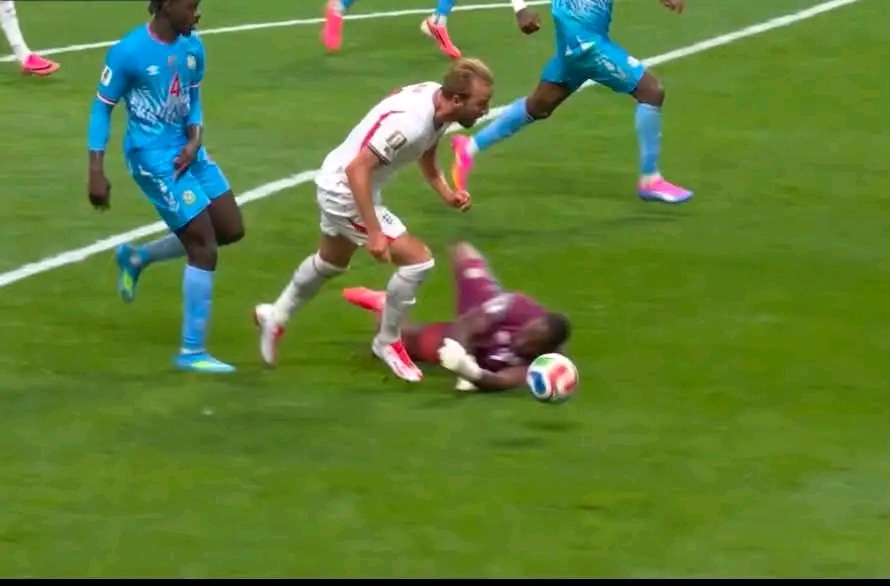
Few decisions in football ignite debate quite like a penalty call, and once again Harry Kane has found himself at the centre of a major talking point. The England captain won a spot-kick following a challenge from the opposing goalkeeper, with opinions across social media and among supporters sharply divided over whether the decision was justified.
However, former England captain and Premier League legend Alan Shearer has made his position crystal clear, insisting that the referee made the correct call and explaining why he believes the contact was enough to warrant a penalty.
Speaking during BBC Sport’s coverage of the match, Shearer offered a detailed assessment of the incident that has quickly become one of the biggest talking points among football fans.
“There is contact, there is no doubt,” Shearer said.
“For me that is a penalty. Kane may have made the most of it but the keeper has come out and his hands are there.
“If he’s going to come rushing out like that with his hands, as a forward you have every right to make connection and go down.”
Those comments have immediately sparked fresh discussion among supporters, pundits and former professionals, many of whom remain split over the interpretation of modern penalty decisions.
Why Shearer Believes the Decision Was Correct
Shearer’s argument is based on a principle that has existed in football for decades. Goalkeepers who charge off their line take a calculated risk. If they mistime their challenge or create contact that prevents an attacker from continuing naturally, they expose themselves to conceding a penalty.
In Kane’s case, Shearer believes the goalkeeper’s aggressive approach ultimately left the referee with little choice.
The Newcastle United legend acknowledged that Kane exaggerated the impact of the contact, but he also stressed that embellishment alone does not erase an infringement if one has already occurred.
His view reflects a distinction often made by referees and analysts alike: players may make the most of contact, but if the initial foul exists, the offence remains punishable.
That is why Shearer was adamant that the decision should stand.
Harry Kane’s Experience Comes Into Play
Harry Kane has built a reputation over many years as one of the smartest centre-forwards in world football.
Beyond his remarkable goalscoring record, Kane is widely admired for his ability to read defenders, anticipate challenges and place himself in positions where mistakes become likely.
Experienced strikers understand exactly when a defender or goalkeeper is overcommitting.
Rather than avoiding every collision, elite forwards frequently protect the ball, step across defenders or continue into inevitable contact.
Supporters often describe this as “being clever,” while critics sometimes accuse attackers of looking for fouls.
The reality often lies somewhere in between.
Kane’s football intelligence has repeatedly allowed him to win important free-kicks and penalties throughout his career without necessarily diving.
Shearer’s comments suggest he believes this latest incident falls into that category.
The Goalkeeper’s Gamble
From a goalkeeper’s perspective, rushing off the line is one of the most difficult decisions to make during a match.
Commit too early and a striker can simply round you.
Stay too deep and you give the attacker time to shoot.
When a goalkeeper commits, everything depends on precise timing.
If the hands or body obstruct the attacker’s path before winning the ball cleanly, officials are increasingly likely to award a penalty.
Shearer believes exactly that happened here.
In his view, once the goalkeeper extended himself and created contact, Kane had every right to continue his run and accept the consequences of the challenge.
Social Media Divided
As expected, Shearer’s verdict has generated enormous reaction online.
Many supporters praised the former striker for explaining the difference between simulation and legitimate contact.
Others argued Kane anticipated the collision and deliberately sought it instead of trying to continue his run.
Some fans insisted the striker could have stayed on his feet.
Others pointed out that players who remain upright after contact are often denied penalties because referees assume no foul occurred.
This contradiction has become one of football’s biggest modern debates.
Attackers are frequently criticised for going down easily, yet they are equally criticised when staying on their feet results in no decision.
VAR Under the Spotlight Again
Unsurprisingly, the incident has also reignited discussion surrounding the Video Assistant Referee.
VAR was introduced to eliminate clear and obvious mistakes, but subjective decisions involving contact continue to divide opinion.
Some viewers believe technology has improved consistency.
Others argue it has simply prolonged controversy.
In situations like Kane’s, VAR officials generally assess whether meaningful contact exists and whether the on-field referee has made a clear error.
If contact is visible and the referee has awarded a penalty, overturning that decision becomes extremely difficult.
That helps explain why Shearer was confident in supporting the officials.
Shearer’s Authority Carries Weight
Alan Shearer is no stranger to physical battles inside the penalty area.
As the Premier League’s all-time leading goalscorer, he spent years dealing with aggressive defenders and goalkeepers.
His understanding of striker movement gives added credibility whenever he discusses incidents involving centre-forwards.
Shearer has never been afraid to criticise players for diving when he believes they have simulated contact.
Equally, he has consistently defended attackers who legitimately earn penalties through intelligent movement.
His assessment of Kane follows that same philosophy.
A Wider Debate About Modern Football
The discussion extends beyond one match.
Football has gradually shifted towards protecting attacking players more effectively than in previous generations.
Challenges that might once have gone unpunished are now examined from multiple camera angles.
Critics argue the game has become too soft.
Supporters of the current laws counter that players deserve protection from reckless challenges regardless of how much contact occurs.
Shearer’s comments suggest he believes the laws are being correctly applied rather than interpreted too harshly.
For him, the key issue is straightforward.
Did the goalkeeper create contact?
If the answer is yes, then Kane is entitled to the decision.
Kane’s Composure Under Pressure
Whatever opinions exist surrounding the award itself, few question Kane’s reliability from the penalty spot.
Throughout his career, he has developed into one of Europe’s most dependable penalty takers.
His calm approach, varied techniques and ability to cope with immense pressure have helped him score countless crucial spot-kicks for both club and country.
Winning penalties is one skill.
Converting them consistently is another.
Kane has repeatedly demonstrated both.
The Debate Is Unlikely to End
Despite Shearer’s confident assessment, football fans are unlikely to reach universal agreement.
Penalty decisions remain among the sport’s most subjective moments.
Every replay can produce a different interpretation depending on the viewer’s perspective.
Some will always believe Kane cleverly used the goalkeeper’s momentum against him.
Others will argue elite strikers are entitled to exploit defensive mistakes.
Meanwhile, critics will continue insisting attackers too readily seek contact inside the area.
That disagreement is part of what makes football so compelling.
Final Thoughts
Alan Shearer has left no room for ambiguity regarding the controversial incident involving Harry Kane.
While acknowledging that Kane may have exaggerated the effect of the collision, the former England captain insists that the crucial factor is the goalkeeper’s decision to rush out with his hands extended and make contact with the striker.
According to Shearer, once that contact occurred, the referee was justified in pointing to the spot.
Whether supporters agree or disagree, his analysis has added another fascinating chapter to the ongoing discussion about penalties, VAR and the balance between attacking intelligence and defensive responsibility.
As football continues to evolve, incidents like this will remain fiercely debated. But one thing is certain: when a figure as respected as Alan Shearer speaks so decisively on a contentious refereeing decision, the conversation is guaranteed to continue long after the final whistle.


 admin
admin