 admin
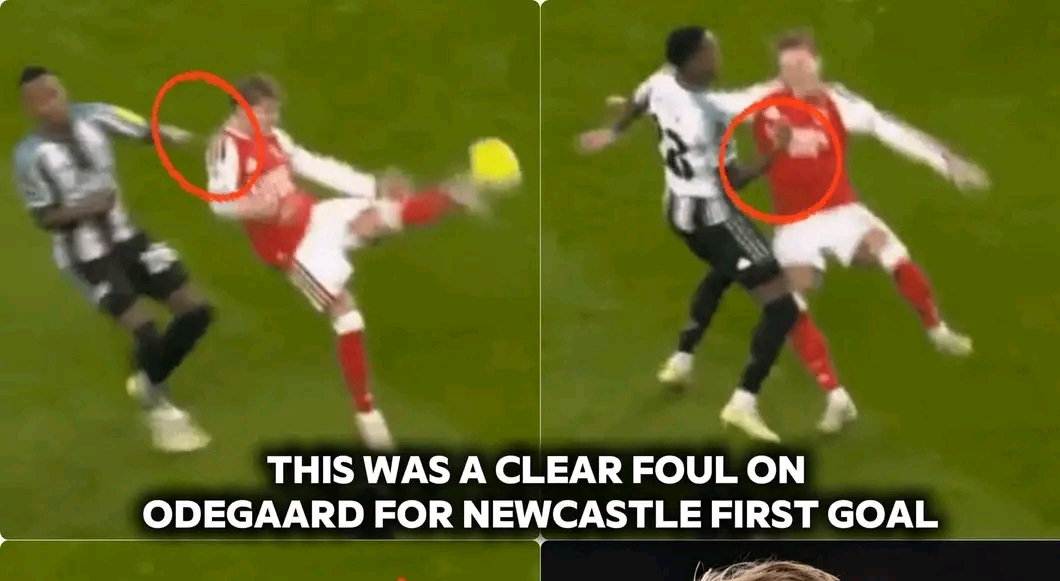
Arsenal fans have been left furious over a controversial incident in the build-up to Newcastle United’s opening goal in the second half, with many believing Martin Ødegaard was clearly fouled by Joe Willock before Harvey Barnes found the back of the net.
The incident has sparked fresh debate about Premier League refereeing standards, particularly when it comes to crucial decisions that can directly influence the outcome of a match. Arsenal supporters are convinced that the goal should never have stood, arguing that Willock’s challenge on Ødegaard was obvious and should have been punished before Newcastle were allowed to continue their attacking move.
The sequence of events leading to Newcastle’s goal has become a major talking point. Ødegaard was involved in the play when Willock appeared to push him, disrupting his control of the ball and preventing him from properly dealing with the situation. The Arsenal midfielder lost possession following the contact, allowing Willock to collect the ball and immediately turn the situation into an attacking opportunity for Newcastle.
Rather than stopping the play to award Arsenal a free-kick, the referee allowed the game to continue. Willock subsequently found Harvey Barnes, who took advantage of the opportunity to finish the move and put Newcastle on the scoresheet. For Arsenal supporters, the problem was not simply the goal itself, but the manner in which the entire attacking sequence was allowed to develop despite what they believe was a clear infringement.
The frustration among Arsenal fans has been understandable, particularly because the incident happened in the build-up to a goal. In football, every decision carries the potential to change the direction of a game, and failing to penalise a foul in such a critical moment can have serious consequences for the team on the receiving end.
Arsenal fans question the decision not to award a foul
The main complaint from Arsenal supporters centres on the contact between Willock and Ødegaard. From the footage being discussed, Willock appears to make a push on the Arsenal captain, affecting his balance and his ability to control the ball. Arsenal fans believe that the contact was sufficient to constitute a foul and that the referee should have immediately stopped play.
The incident has raised questions about whether the officials properly assessed what happened before Newcastle moved forward. Supporters feel that the focus should have been on the initial contact rather than allowing the attacking team to benefit from possession gained in circumstances they consider unfair.
For Arsenal, losing possession in that manner was particularly frustrating because Ødegaard was not simply dispossessed through a clean challenge or a mistake of his own. The argument being made by supporters is that he was pushed off the ball, leaving Willock in a position to take advantage of the situation and initiate the attack.
When a team scores after an incident that its opponents believe should have resulted in a free-kick, the controversy inevitably becomes much bigger. It is no longer just a discussion about whether a challenge was fair. It becomes a debate about the role of the referee, the effectiveness of VAR and whether the rules are being applied consistently throughout the competition.
The goal could have been prevented
The biggest concern for Arsenal is that the entire sequence could potentially have been stopped before Barnes had the opportunity to score. Had the referee recognised the contact on Ødegaard and awarded a free-kick, Newcastle’s attacking move would have been brought to an end before it developed into a goalscoring opportunity.
Instead, the decision to allow play to continue meant Newcastle were able to capitalise on the situation. Willock regained possession, progressed the ball and found Barnes, who completed the move with a finish that punished Arsenal.
That is precisely why the incident has generated so much anger among supporters. Arsenal fans are not arguing that Newcastle should not be allowed to score through legitimate attacking play. Their complaint is that the move should have been stopped at the very beginning because of the alleged foul on Ødegaard.
In the Premier League, moments like these can have enormous consequences. A goal can change a team’s approach, force a manager into tactical adjustments and shift the momentum of an entire match. When a goal is scored following a disputed decision, the frustration is often amplified because players and supporters feel they have been denied a fair opportunity to defend their goal.
Arsenal supporters will undoubtedly feel that the officials missed an opportunity to make the correct decision, particularly because the contact appeared to be visible during the incident.
Questions over VAR and Premier League officiating
The controversy has also renewed the discussion surrounding the use of VAR in the Premier League. Although VAR was introduced to help referees correct clear and obvious errors, supporters continue to question its effectiveness in situations involving potential fouls in the build-up to goals.
Whenever a goal is scored, VAR has the responsibility of examining the relevant aspects of the attacking phase to determine whether there was an infringement that should lead to the goal being disallowed. However, the process often leaves fans frustrated when incidents they consider obvious are not overturned or even properly addressed.
Arsenal supporters may therefore wonder whether the contact between Willock and Ødegaard was reviewed and, if so, why the decision was not changed. From their perspective, the push was significant enough to interfere with Ødegaard’s ability to maintain possession, making it difficult to understand how Newcastle were allowed to continue the move without punishment.
The difficulty with these decisions is that officials must determine whether contact constitutes a foul, whether it materially affects the player and whether the incident meets the threshold for intervention. Nevertheless, supporters expect consistency and clarity, particularly when an infringement could directly lead to a goal.
The Premier League has faced repeated criticism over controversial decisions in recent seasons, with clubs, managers and fans regularly questioning the interpretation of certain incidents. Arsenal’s latest complaint is likely to add to those conversations, especially if supporters believe that a straightforward foul was overlooked at a crucial moment.
Arsenal cannot afford decisions like this in crucial matches
For a club competing for major honours, every point can make a significant difference. Arsenal have spent recent seasons trying to establish themselves among the strongest teams in English football, and matches against difficult opponents can ultimately determine whether their ambitions are achieved.
That is why controversial decisions are particularly painful when they occur in important fixtures. A team can spend the entire match working to create opportunities, defend effectively and maintain its competitive position, only for one disputed incident to change the scoreline.
Arsenal supporters will feel that the alleged foul on Ødegaard was exactly the type of situation that should have been handled correctly by the officials. When an opponent is seemingly pushed off the ball and the attacking team immediately benefits from the resulting possession, it becomes difficult for the affected side to accept that no punishment was given.
There is also the wider issue of accountability. Fans want to know whether referees are being properly assessed after controversial incidents and whether mistakes are being used as opportunities to improve the quality of officiating. While errors are an unavoidable part of football, the introduction of VAR was supposed to reduce the number of decisive mistakes, particularly those involving goals.
If incidents like this continue to generate widespread frustration, questions will inevitably arise about whether the current system is delivering the level of accuracy and consistency expected from the Premier League.
A decision that will continue to divide supporters
Newcastle will naturally be pleased with the goal and the outcome of the attacking move, but Arsenal supporters are likely to remain unhappy with the manner in which it was scored. The debate will continue to revolve around the contact between Willock and Ødegaard and whether the referee should have stopped the game before Barnes received the ball.
The footage has given Arsenal fans another reason to question the standard of officiating, with many believing the push was clear enough to warrant a free-kick. Their frustration is understandable because the incident was not isolated from the goalscoring action; it was directly connected to how Newcastle gained possession and created the opportunity.
Ultimately, the controversy highlights the importance of getting decisions right in the build-up to goals. A missed foul can completely change a match, leaving one team celebrating while the other feels unfairly punished.
Arsenal supporters will be left asking the same question: if a push that appears to disrupt a player and lead directly to a goal is not considered a foul, what exactly does it take for the officials to intervene?
That is the debate this incident has reignited, and until supporters feel that refereeing decisions are being made consistently and transparently, controversial moments like this will continue to dominate discussions long after the final whistle. 💯


 admin