 admin
Everton’s dramatic 2-2 draw against Hull City has sparked intense debate among football supporters after Brennan Johnson saw his first-half goal ruled out following a controversial Video Assistant Referee (VAR) intervention.
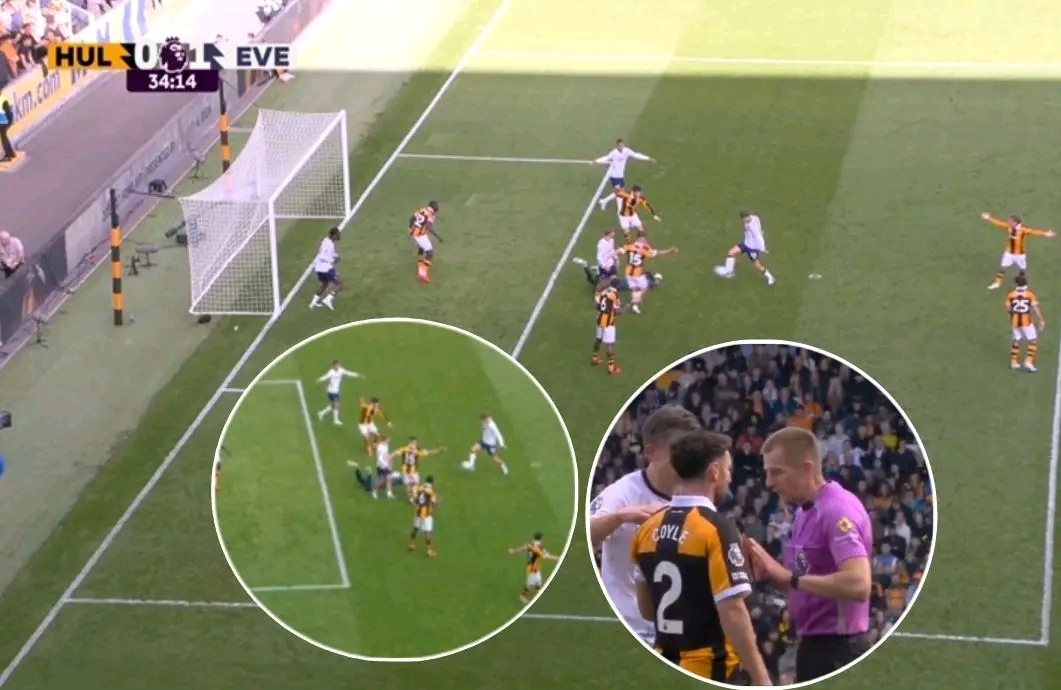
The incident occurred on Sunday, October 11, 2026, during an entertaining Premier League encounter at the MKM Stadium. Everton believed they had taken the lead when Johnson found the back of the net, only for referee Michael Salisbury to overturn his original decision after reviewing the incident on the pitchside monitor.
The decision immediately became one of the major talking points of the contest, with questions emerging over the interpretation of the offside rule and whether Johnson had genuinely interfered with an opponent.
How VAR Denied Brennan Johnson His Goal
Everton had started brightly and created several promising opportunities before the controversial moment unfolded around the 35th minute.
Jarrad Branthwaite delivered a dangerous ball into the Hull City penalty area, but goalkeeper Konstantinos Tzolakis failed to hold it under pressure from Thierno Barry.
The loose ball fell to Harrison Armstrong, whose attempt towards goal was blocked by Hull defender Nobel Mendy. During the ensuing scramble, Johnson attempted to capitalise on the rebound, with the ball eventually finding its way into the net.
The Everton forward celebrated what appeared to be an important breakthrough for David Moyes’ side. However, the celebrations were interrupted when VAR began examining the incident.
After reviewing the footage, Salisbury overturned his original decision, ruling that Johnson had been in an offside position and had interfered with Hull defender Ryan Giles while Armstrong’s shot was being attempted.
The Premier League Match Centre subsequently explained that Johnson was deemed to be challenging an opponent for the ball while in an offside position.
Consequently, Everton were denied the opening goal, leaving both teams level as the match continued.
Why The Refereeing Decision Has Divided Opinion
The central issue surrounding the incident was not simply Johnson’s position on the pitch but whether his involvement affected an opponent’s ability to play the ball.
Under the offside laws, a player can be penalised even without touching the ball if they interfere with an opponent or otherwise become actively involved in play from an offside position.
In this case, the officials concluded that Johnson’s position and subsequent involvement in the scramble satisfied the conditions for an offside offence.
Nevertheless, the incident has fuelled discussion about how such situations should be judged, particularly when a goal results from a deflection during a crowded penalty-area scramble.
Some supporters may question whether the intervention was necessary, while others will argue that the officials correctly applied the existing rules.
Former refereeing officials have also weighed in on the debate, with assessments focusing on whether Johnson’s presence and movement genuinely challenged the Hull defender.
The controversy highlights the fine margins involved in modern football officiating, where a decision that appears straightforward at first can become complicated when reviewed from different angles.
Former Officials Offer Different Perspectives
The decision has attracted further attention because of differing views on how the offside law should be applied.
Former PGMOL chief Keith Hackett criticised the complexity of the interpretation, arguing that the goal would have been allowed under the approach he was accustomed to during his refereeing career. Meanwhile, former Premier League official Darren Cann reportedly considered the intervention correct because Johnson was in an offside position and challenged an opponent.
These contrasting assessments have intensified the discussion surrounding the incident, with supporters debating whether the current interpretation of the rules is sufficiently clear.
However, the official explanation remains that Johnson was penalised for interfering with an opponent, rather than simply because he was standing in an offside position.
Everton Recover But Miss Out On All Three Points
Despite the frustration of having their goal disallowed, Everton continued to create opportunities and eventually found the net twice in the second half.
Hull City took the lead through Joe Gelhardt shortly after the restart, capitalising on a defensive mistake by Ainsley Maitland-Niles.
Everton responded through Kiernan Dewsbury-Hall, who headed home Maitland-Niles’ cross before Thierno Barry put the visitors ahead with an impressive finish.
However, Hull refused to surrender and substitute Mohamed Belloumi restored parity, securing a 2-2 draw for the home side.
The result allowed Everton to maintain their unbeaten start to the league campaign, although David Moyes’ side were left frustrated after failing to turn their opportunities into a victory.
VAR Debate Continues After Another Controversial Moment
The incident involving Johnson has once again placed the spotlight on the role of technology in football and the importance of consistent officiating.
VAR was introduced to help referees correct important errors, but decisions involving interference and offside positioning can still generate disagreement among supporters and pundits.
In this particular case, the Premier League’s official explanation provides the reasoning behind the decision. Nevertheless, the debate over whether the interpretation was appropriate is likely to continue among Everton fans and neutral observers.
For Johnson, the disallowed effort was a frustrating moment in a match that ultimately ended in a draw. For Everton, it was another reminder of how a single refereeing decision can become a major talking point in a tightly contested Premier League encounter.
The key question remains: was the decision a correct application of the offside law, or does the incident demonstrate why football needs greater clarity around interference with opponents?
The official ruling was offside, but the controversy surrounding Johnson’s disallowed goal shows that the debate over VAR is far from over.
Sources: Premier League official VAR explanation, Everton FC match report, and contemporary match coverage.


 admin