 admin
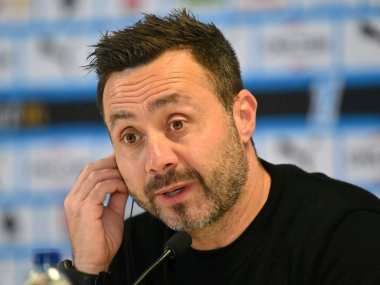
adminDerek McInnes’ insistence that Rangers “aren’t as bad as people think” is becoming increasingly difficult to defend after a damaging home defeat to Hibernian.
Rangers are now five points behind Celtic after just two league matches and remain without a victory in their opening three competitive fixtures. For a club with Rangers’ resources and ambitions, that represents a deeply concerning start.
McInnes attempted to defend his side’s performance after the Hibernian loss, highlighting the effort of his players, questioning the penalty decision and insisting Rangers were the better team. However, those comments risk sounding more like an attempt to explain away the result than an honest assessment of the problems facing his team.
The defeat exposed serious concerns surrounding Rangers’ tactical structure, defensive organisation, squad integration and McInnes’ ability to get the required level of performance from his players.
Tactical problems exposed
McInnes’ decision to use a 4-3-3 formation was supposed to give Rangers greater control in midfield while allowing their attacking players to exploit Hibernian from wide areas.
Instead, the system created significant gaps that Hibernian repeatedly targeted.
Rangers struggled to protect their defence, while the additional attacking emphasis failed to produce enough chances to justify the defensive risks. Hibernian remained disciplined, absorbed Rangers’ pressure and exploited the spaces left behind when Rangers committed players forward.
The result was a tactical setup that offered neither the defensive security nor the attacking superiority Rangers needed.
Rather than controlling the match through possession and territorial dominance, Rangers allowed Hibernian opportunities to counterattack and punished themselves through poor defensive organisation.
That raises serious questions about McInnes’ preparation for the fixture.
Defensive organisation remains a major concern
Individual mistakes certainly played a part, but Rangers’ problems cannot simply be blamed on one or two players.
The bigger concern was the lack of collective defensive structure.
Tuur Rommens struggled defensively, while debutant Olwethu Makhanya found himself facing the difficult challenge of dealing with Hibernian’s organised attacking movement. Emmanuel Fernandez was also repeatedly forced into reactive defending rather than operating within a stable defensive unit.
The positioning of Rangers’ full-backs created further problems. Their desire to provide attacking width left spaces that Hibernian’s forwards were able to exploit.
That suggests a tactical issue rather than simply individual errors.
McInnes must therefore take responsibility for the defensive framework his team was operating within.
The penalty controversy
McInnes was particularly critical of the penalty decision, insisting that he did not believe it should have been awarded and questioning the VAR intervention.
The decision may well be debated, but Rangers’ frustration with the referee should not obscure the circumstances that led to the incident.
Vanja Dragojevic’s challenge created the situation, and the midfielder’s selection was ultimately McInnes’ decision.
Rather than allowing the penalty controversy to dominate the post-match discussion, Rangers need to examine why they repeatedly found themselves vulnerable in dangerous situations.
Elite teams cannot rely on refereeing decisions going their way. They must minimise the circumstances in which one controversial call can have such a significant impact on the result.
Dragojevic faces scrutiny
Dragojevic was handed his first competitive appearance after joining Rangers from Partizan Belgrade, with McInnes choosing him ahead of Mohamed Diomande.
Unfortunately for the manager, the decision quickly came under scrutiny after the midfielder was involved in the penalty incident.
His overall contribution was also limited, raising questions about whether he was ready for the demands of the fixture.
That does not mean Dragojevic should be written off after one appearance, but McInnes must assess whether the midfielder is currently the right option for matches in which Rangers need greater control and experience.
Makhanya’s difficult debut
Olwethu Makhanya also endured a difficult introduction to competitive football at Rangers.
The South African defender was asked to operate in a defence that was already struggling for organisation, making the challenge considerably harder.
His performance should be judged within that context. However, McInnes must now decide whether continuing to rely on inexperienced players is the right approach while Rangers are attempting to recover from a poor start.
There is a strong argument that established defenders should be prioritised until the team regains stability.
Chermiti injury adds another problem
Rangers also suffered another major setback when Youssef Chermiti was forced off with a knee injury.
The forward is regarded as one of the club’s most dangerous attacking players, and Rangers recently rejected a reported £22 million bid from Galatasaray for his services.
His injury therefore represents a potentially significant blow to McInnes’ plans.
The manager admitted afterwards that he hoped Chermiti had avoided serious damage, but Rangers now need more than hope. They require a proper assessment of the injury and a clear contingency plan should the striker face an extended spell on the sidelines.
Losing a key attacking player while already struggling for results could make Rangers’ difficult start even more problematic.
Hibernian deserve credit
It would also be unfair to suggest that Rangers simply threw the game away.
Hibernian deserve significant credit for their performance.
David Gray’s side defended with discipline, remained compact and consistently looked capable of exploiting Rangers when possession was turned over.
Their organisation prevented Rangers from establishing a sustained rhythm and forced McInnes’ players into increasingly desperate attacking situations.
Hibernian’s victory was therefore not simply the result of Rangers’ mistakes. They executed their game plan effectively and exposed weaknesses that McInnes must now address.
The five-point gap to Celtic
Rangers are already five points behind Celtic after only two league games.
There is, of course, an enormous amount of football still to be played, meaning it would be premature to suggest the title race has already been decided.
However, early-season results matter.
Winning early builds confidence, creates momentum and gives players belief in the manager’s methods. A poor start can have the opposite effect, particularly at a club where expectations are exceptionally high.
Rangers have drawn with Dundee United and lost to Jagiellonia Białystok and Hibernian. That means McInnes has yet to oversee a competitive victory.
The longer that run continues, the greater the pressure will become.
Summer signings yet to make the required impact
Several of Rangers’ summer arrivals were expected to raise the overall standard of the squad.
Cammy Devlin, Lawrence Shankland, Nicolas Raskin, Vanja Dragojevic and other additions have yet to collectively provide the transformation supporters expected.
Shankland, in particular, needs to start producing goals consistently, while Devlin is expected to provide greater authority in midfield.
Dragojevic’s difficult debut has only increased scrutiny around the recruitment process.
The players may still prove their value, but McInnes must find a way of integrating them quickly. Rangers cannot afford to spend months waiting for a new-look squad to develop while the gap at the top of the table grows.
McInnes must take responsibility
Perhaps the biggest concern from the Hibernian defeat was not simply the result but the message coming from the manager afterwards.
Insisting that Rangers were the better team and focusing heavily on the penalty risks creating a misleading picture of what actually happened.
Managers must protect their players, but they must also identify weaknesses honestly.
Rangers were not sufficiently organised defensively. Their formation exposed vulnerabilities. Their attacking play lacked the required cutting edge, and Hibernian repeatedly found ways to exploit the spaces available to them.
Those are the issues McInnes needs to confront.
Effort alone is not enough at Rangers. The club requires tactical clarity, defensive discipline, consistent performances and results.
Is McInnes already under pressure?
It would be excessive to demand managerial change after only three competitive matches.
However, it is entirely reasonable for questions to be asked.
McInnes’ early tenure has produced a draw and two defeats, defensive uncertainty, tactical questions and growing concern among supporters.
If the results continue to deteriorate, Rangers’ hierarchy will eventually have to consider whether the manager is capable of delivering the required improvement.
For now, the priority should be immediate correction rather than panic.
McInnes must reassess his formation, improve the defensive structure, make better use of his established players and find a way to compensate for Chermiti if his injury proves serious.
What Rangers must do next
Rangers now need a clear response rather than more explanations.
Tactical reassessment: McInnes must reconsider whether the current 4-3-3 system provides the defensive balance required.
Personnel decisions: Established players may need to be prioritised while new arrivals and inexperienced options adapt to the demands of Scottish football.
Defensive improvement: Rangers need greater protection in front of their centre-backs and better coordination between midfielders and full-backs.
Chermiti contingency: The club must prepare for the possibility that the striker could miss a significant period.
Managerial accountability: McInnes must accept responsibility for the tactical shortcomings and demonstrate that he understands how to fix them.
Rangers cannot ignore the warning signs
McInnes’ claim that Rangers “aren’t as bad as people think” may ultimately prove correct.
But at the moment, the results are giving supporters plenty of reasons to disagree.
Rangers are five points behind Celtic after two league matches, have failed to win any of their opening three competitive fixtures and have already shown worrying defensive weaknesses.
The season is still young, so there is time to turn things around.
But the Hibernian defeat should be treated as a warning rather than dismissed as an isolated setback.
McInnes now has to prove that Rangers’ poor start is merely a temporary problem and not evidence of deeper tactical and organisational flaws.
The next few matches could therefore be crucial.
If Rangers respond with convincing performances and victories, the Hibernian defeat will quickly become a painful memory. If the problems continue, however, the pressure on McInnes—and questions over whether he was the right appointment—will only intensify.

 admin
admin