 admin
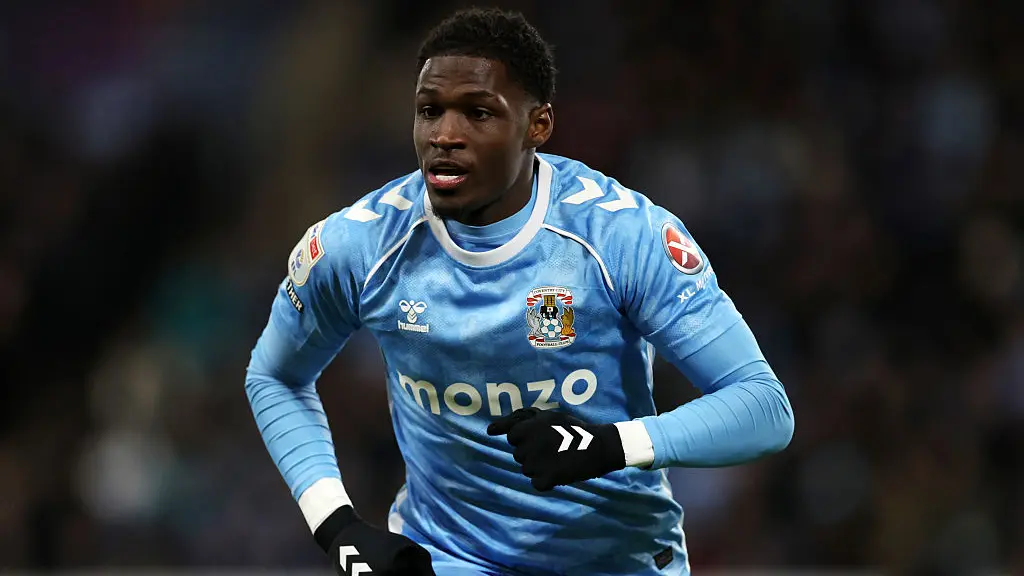
adminRangers appear set to miss out on one of their primary wide-attacking targets as the summer window enters its final stages, with reports indicating that Jahnoah Markelo is nearing a surprise move to the Middle East rather than heading to Ibrox. The development is a frustrating one for Derek McInnes and his recruitment staff, who had been quietly working to finalise a deal for the Coventry City winger, only to be seemingly overtaken by an unexpected suitor from outside Europe.
Interest in Markelo had been longstanding before this latest twist. Sky Sports previously confirmed that Rangers were in active discussions with the newly promoted Premier League side regarding a potential loan for the 23-year-old, with Ibrox officials viewing him as a strong candidate to fill the wide role they have targeted all summer. McInnes has spoken openly about his need for greater pace, directness, and tactical adaptability in attack as Rangers look to refresh a squad that underperformed last season, and Markelo’s skill set appeared to check virtually every box on that list.
The Suriname international’s development path has been notably diverse, spanning several countries—a background that only heightened his appeal to a recruitment team keen on proven versatility. Born in the Netherlands, Markelo came through Ajax’s youth system and later spent time at Twente, though he was released by the Eredivisie club in 2022. Rather than stalling his career, that setback launched him on a journey that included spells at Go Ahead Eagles, Croatian side Kustošija, and Slovenian club Celje, before FC Zurich signed him in 2024 and gave him the stage to blossom into a genuine attacking threat in Swiss football.
That Zurich breakthrough paved the way for his move to English football, with Coventry City paying a reported £4.3 million to bring him to the CBS Arena in January. The transfer marked a major step up for the young winger, joining a Championship side pushing hard for promotion—which they ultimately achieved, returning to the Premier League for the first time in decades. For Markelo, however, that success has not translated into regular first-team minutes under Frank Lampard; he has made just five appearances, mostly from the bench, since arriving in the West Midlands. With competition from Tatsuhiro Sakamoto, Ephron Mason-Clark, and Brandon Thomas-Asante, and Coventry further bolstering their wide options through the club-record signing of Loum Tchaouna from Burnley, Markelo’s path to consistent Premier League football at Coventry looks increasingly blocked.
That lack of game time made a loan exit this summer a logical outcome for all sides, and Rangers moved relatively quickly to exploit the situation. Reports from Football Insider suggested talks between Rangers and Coventry were progressing positively, with sources indicating both clubs believed a deal could be struck in the final weeks of the window. The Rangers Review and Scotsman also confirmed the club’s interest, framing Markelo as a genuine top target for the right-sided attacking role McInnes has been desperate to fill before the domestic deadline. Given Coventry’s own clear priority of Premier League survival over nurturing talent who might not feature heavily, the structural logic of a temporary switch to Ibrox seemed sound.
However, in a development that has caught many off guard, Emirati outlet UAE Kick has reported that Shabab Al-Ahli are now finalising an agreement to sign Markelo, taking him to the Middle East instead of Scotland. According to UAE Kick, which bills itself as the leading source of football news in the UAE, the Dubai-based club moved decisively to hijack the negotiations despite what the outlet described as strong efforts from Rangers to complete their own deal. The report specifically noted Shabab Al-Ahli’s ability to register Markelo under the UAE Pro League’s designated resident player quota—a regulatory detail that gives clubs added incentive to pursue certain overseas targets whose passport status allows them to be counted outside the league’s standard foreign player allocation.
That resident player mechanism is worth understanding in more depth, as it helps explain why a club like Shabab Al-Ahli might act so aggressively and swiftly to secure a player like Markelo ahead of European interest. UAE Pro League rules impose strict limits on how many foreign players a club can register and select, making squad-building a careful balancing act. Players who qualify for resident status—through specific nationality provisions, family heritage, or other regulatory routes—effectively allow clubs to add overseas quality without consuming their limited foreign-player quota. For a club with Shabab Al-Ahli’s financial resources, being able to sign a player of Markelo’s pedigree and register him outside the standard foreign bracket is an extremely attractive proposition, making an ambitious swoop considerably more viable than it might otherwise appear.
Should the UAE Kick report prove accurate, it would represent a significant setback for Rangers’ recruitment plans in the closing days of the window. McInnes had specifically highlighted wide areas as needing reinforcement, with Ibrox chiefs having monitored several other attacking targets throughout the summer alongside Markelo, including Brighton’s Amario Cozier-Duberry and Fares Ghedjemis. That Rangers were actively weighing multiple options in the same position underscores just how seriously the club has treated the need to strengthen its attacking width, and losing out on what appeared to be their most advanced and realistic pursuit will inevitably force a rapid reassessment of how to fill that gap before the domestic window slams shut.
There is also a broader context here about the growing financial clout of clubs across the Middle East and the increasing frequency with which they are able to outmanoeuvre traditional European leagues for players who might once have been seen as natural fits for British clubs. The UAE Pro League, backed by substantial recent investment, has developed a reputation for moving quickly and decisively in the transfer market, often offering wages and fees that clubs operating within the financial constraints of the Scottish Premiership simply cannot match. For Rangers, competing not only against domestic rivals but also against leagues with far deeper pockets has become an increasingly difficult exercise, and the Markelo situation—if it unfolds as reported—would serve as a pointed reminder of that reality.
None of this is to suggest Rangers were negligent or slow in their pursuit. By all accounts, the club moved with reasonable urgency once Markelo’s availability became clear, holding direct talks with Coventry and working to structure a loan that would have made sound business sense for a club looking to add proven attacking quality without a permanent transfer fee. Sometimes, however, even well-run pursuits can be undone by factors beyond a club’s control—whether a rival’s financial firepower, a regulatory advantage like the one reportedly available to Shabab Al-Ahli, or simply a player’s own change of heart about where he wants to continue his career. If the reports from the UAE prove accurate, this appears to be a case of the latter two factors combining to put Rangers at a structural disadvantage they were always going to struggle to overcome.
For McInnes, the priority now shifts firmly to identifying and pursuing alternative targets capable of delivering the wide impact he had hoped Markelo would provide. Having already been linked with Cozier-Duberry and Ghedjemis earlier in the window, it would be no surprise to see Rangers’ recruitment staff move to reignite interest in one or both, or to explore fresh options not yet publicly reported. Time, however, is becoming increasingly scarce as the deadline approaches, and McInnes will be acutely aware that identifying, negotiating, and completing a new deal within the remaining window represents a considerably tighter logistical challenge than continuing to push for a player with whom talks were already well advanced.
The timing of this setback is also worth considering within the broader context of Rangers’ start to the season. Their opening weekend brought a hard-fought 1-1 draw away at Dundee United, a result that left McInnes and his players with plenty to reflect on—both the contentious penalty shout involving Mohamed Diomande and the broader attacking struggles evident for large parts of the match. Rangers found chances difficult to create against a well-organised United side, and the lack of a reliable outlet capable of stretching defences and creating one-on-one opportunities out wide was a recurring theme in post-match analysis. A player with Markelo’s attributes—able to isolate full-backs and drive at defences with genuine pace and directness—would have offered precisely the solution McInnes appeared to be crying out for during that draw. Missing out on his signature, then, arrives at a particularly inconvenient moment, just as Rangers prepare for the visit of Jagiellonia Bialystok in a crucial Europa League qualifying tie that will demand a more incisive and varied attacking approach than was on display in the league opener.
It is also worth taking a closer look at exactly what Rangers stand to lose from a purely footballing perspective, should the Markelo pursuit ultimately collapse as UAE Kick has suggested. Those who have watched him closely during his time in Switzerland and his brief appearances in English football describe a winger whose defining trait is his explosive burst of acceleration over the first few yards—the sort of attribute that can turn a routine defensive situation into a genuine crisis for an opposing full-back in an instant. Combined with a clear willingness to take defenders on directly rather than looking for the safe sideways pass, that pace made him an obvious fit for a Rangers side that has, at various points over recent seasons, been accused of lacking a genuine outlet capable of unlocking well-organised, deep-lying defensive blocks in the Scottish Premiership. Domestic football north of the border is littered with sides that set up specifically to frustrate Rangers and Celtic by sitting deep and compact, and a direct, one-on-one specialist like Markelo would have offered a genuine release valve against exactly that type of opposition.
Beyond his raw physical gifts, reports from those who have tracked his development also point to good balance and close control at speed, allowing him to retain possession even when running at full tilt rather than relying solely on pace to beat his man. That combination of physical and technical qualities is relatively rare in a player still only 23, and it goes some way to explaining why Rangers moved as decisively as they did once his availability became clear, and why the club had been monitoring his situation for some time even before his struggles for regular football at Coventry fully emerged.
The nature of his marginalisation at Coventry also tells its own story about squad-building at a newly promoted Premier League club. Frank Lampard’s side spent heavily this summer to boost their survival chances, bringing in Loum Tchaouna from Burnley for a club-record fee reported around £20 million, alongside significant outlays on defender Aurelie Amenda from Eintracht Frankfurt and midfielder Frank Onyeka following the activation of a loan clause with Brentford. That level of investment in established Premier League and international quality left Markelo—still relatively raw in terms of English top-flight experience—increasingly squeezed out of Lampard’s immediate plans, regardless of the promise he had shown in Switzerland. It is a familiar story for young, gifted attacking players arriving at newly promoted clubs determined to prioritise survival over development, and it is precisely that dynamic which made a loan move away from Coventry—whether to Rangers or elsewhere—such a logical next step.
For Rangers supporters who have followed the Markelo saga closely over recent days, the emergence of the UAE Kick report will inevitably prompt some scepticism about the reliability of Middle Eastern transfer reporting when it comes to sourcing and verification—an entirely fair point given the sometimes rapid and excitable nature of transfer coverage in that part of the football media landscape. It is not uncommon for reports of imminent signings to emerge from regional outlets only for deals to subsequently collapse or fail to materialise as initially suggested. That note of caution is worth bearing in mind, and Rangers fans would be forgiven for wanting to see official confirmation from either Coventry City or Shabab Al-Ahli before fully accepting that the Ibrox club’s interest in Markelo has been definitively ended. Nevertheless, the specificity of the reporting—including detailed reference to the resident player registration mechanism that would make the move financially and structurally sensible for the Emirati side—does lend the claims a greater degree of credibility than a more vague or speculative rumour might otherwise carry.
Should the move to Shabab Al-Ahli be confirmed in the coming days, it would also represent a notable moment in Markelo’s own career, taking him away from the established pathway through European football that had defined his development to this point and into an entirely different footballing environment in the Gulf. The UAE Pro League has increasingly positioned itself as an attractive destination for talented young players from Europe, offering competitive wages, high-quality facilities, and continental football through the AFC Champions League, even if the broader level of domestic competition remains a point of debate among observers. For a player in Markelo’s position—still searching for a consistent platform to demonstrate his talent after a difficult few months on the fringes at Coventry—the promise of regular first-team football in a well-resourced environment may well have proven more appealing than fighting for a starting berth in a physically demanding Scottish Premiership title race, however prestigious a move to Ibrox might otherwise have appeared.
Whatever the final outcome of the Markelo saga, the broader picture for Rangers remains one of a recruitment department still working hard to complete the finishing touches on what has already been an extensive summer rebuild under Derek McInnes. Eight new faces have already arrived at Ibrox across the transfer window, spanning defence, midfield, and attack, as McInnes looks to construct a squad capable of competing on multiple fronts this season. Losing out on Markelo, while undoubtedly a setback given how advanced talks were reported, does not fundamentally alter the broader trajectory of that rebuild, but it does underline the competitive and increasingly global nature of the modern transfer market, where even a club the size of Rangers can find itself outmuscled by suitors from entirely different footballing continents when regulatory quirks and financial firepower combine in a rival’s favour.
The coming days will likely bring further clarity on exactly where things stand, both in terms of confirmation of Markelo’s next destination and in terms of Rangers’ response as they look to identify a credible alternative before the domestic deadline arrives. For now, though, the mood among Rangers supporters is one of frustration tempered with realism—an acceptance that not every target pursued during a busy window can be successfully landed, and a recognition that the recruitment team must now move swiftly to ensure this particular setback does not leave a lasting gap in McInnes’s attacking options as the season begins to gather pace.
There remains, of course, a chance that the situation could still shift before anything is finalised. Transfer sagas of this nature have a habit of taking unexpected turns right up until contracts are signed and medicals are completed, and reports of an imminent move to the Middle East, however well-sourced, are not always the final word on a player’s destination. Rangers will presumably continue to monitor the situation closely in case Shabab Al-Ahli’s pursuit encounters any last-minute complications, while simultaneously accelerating work on alternative targets to ensure they are not left short in wide areas regardless of how the Markelo situation ultimately resolves itself.
What is clear, though, is that Rangers cannot afford to sit back and wait to see how things unfold. With the transfer deadline fast approaching and McInnes having been explicit about his desire to add further reinforcements before the window closes, the recruitment team at Ibrox now face a race against time to identify a credible alternative capable of delivering the attacking width and directness that Markelo would have provided. Whether that means returning to previously monitored targets like Cozier-Duberry or Ghedjemis, or moving for a fresh name entirely, the coming days promise to be a busy and pressured period behind the scenes at Ibrox as Rangers look to ensure their summer rebuild concludes with the squad depth and balance McInnes has been working to achieve since taking charge.

 admin
admin