 admin
adminEngland is on the brink of what could become one of the most momentous decisions in football history, as mounting anger over FIFA’s latest proposals sends shockwaves through the sport.
Behind closed doors, the Football Association is said to be deeply troubled by FIFA’s plans to overhaul the management structure of its competitions, with internal discussions already underway about how England might respond should the reforms gain traction.
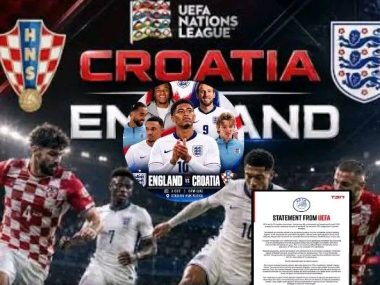
Across Europe, football officials have reacted with dismay, while fans have taken to social media to voice their frustration. UEFA has issued an unusually forceful condemnation, warning that the plans represent a perilous shift in how the world’s premier sporting events are governed.
With the 2030 FIFA World Cup already poised to be one of the most distinctive tournaments in history, controversy surrounding the sport’s global governing body has once again taken centre stage.
UEFA Says FIFA Has “Crossed a Line”
The fiercest backlash has come from UEFA.
European football’s governing body has made plain its view that FIFA’s proposals threaten the established framework of international football.
In a sharply worded response, UEFA stated that the plans “cross a line that football’s governing institutions should never cross,” signalling a serious fracture in relations between the two organisations.
The comments underscore tensions that have been simmering for years over the sport’s future direction.
Disputes over tournament expansion, the international match calendar, commercial rights, and governance have repeatedly put UEFA and FIFA on opposing sides of major debates.
Many officials now worry that this latest proposal could widen the rift even further.
The Controversial Proposal
At the heart of the dispute are reported plans by FIFA to create a private company to oversee its competitions.
Under the proposal, external investors could potentially buy financial stakes in that entity.
Proponents argue that private capital could unlock substantial new revenue, boost commercial operations, and increase funding for football development worldwide.
Critics, however, foresee the opposite.
They fear that allowing outside investors into the management of football’s crown-jewel events risks prioritising profit over sporting integrity.
Opponents stress that the FIFA World Cup is far more than a commercial asset.
It is widely regarded as one of the greatest sporting spectacles on Earth—an event rooted in tradition, national pride, and decades of football heritage.
Many fear that private investment could fundamentally alter how those competitions are run.
FA “Deeply Concerned”
Reports indicate that the Football Association is treating the matter with the utmost seriousness.
According to sources familiar with the deliberations, the proposals are seen as one of the most significant governance challenges in recent memory.
Some insiders have reportedly drawn parallels with the failed European Super League project of 2021.
That breakaway competition unravelled within 48 hours after clubs, fans, governments, and football authorities united in opposition.
For many in English football, the Super League episode left a lasting lesson: when supporters feel football is being taken away from them, resistance can become overwhelming.
That experience is said to be shaping current thinking within the FA.
Could England Really Boycott the World Cup?
Perhaps the most pressing question is whether England might actually refuse to take part in a FIFA World Cup.
At this stage, no formal decision has been made.
However, reports suggest that a boycott could become part of broader discussions if opposition to FIFA’s plans continues to escalate.
Any such move would almost certainly require close coordination with other UEFA member associations.
For England to act alone would be an extraordinary step.
A unified European response would carry far greater political and sporting influence.
Much may hinge on future meetings between national associations and UEFA leadership.
If enough countries rally against the proposals, pressure on FIFA could intensify dramatically.
Relations Between FIFA and UEFA
The relationship between FIFA and UEFA has grown increasingly fraught in recent years.
A series of high-profile disagreements have exposed deepening tensions over football governance.
Questions around tournament expansion, scheduling, commercial rights, and decision-making have repeatedly driven a wedge between the two bodies.
UEFA president Aleksander Ceferin has previously criticised several FIFA moves and voiced concerns over what he sees as the growing commercialisation of international football.
Those clashes now appear to be heading towards yet another major confrontation.
Political Debate Intensifies
The controversy has also drawn political interest.
Some politicians have argued that football should remain under the control of sporting institutions, not commercial investors.
Critics insist that the World Cup belongs to supporters, players, and national associations—not financial markets.
Others contend that modern sport increasingly demands significant investment, and that attracting fresh capital is vital to compete in a fast-changing global entertainment landscape.
The debate thus extends well beyond football itself.
It raises fundamental questions about who should have ultimate control over the world’s biggest sporting events.
Rumours and Online Speculation
The furore has also fuelled widespread online conjecture.
Some social media posts have linked the proposals to political figures or broader geopolitical interests, including unsubstantiated allegations involving former US President Donald Trump and his associates.
However, no credible public evidence has emerged to support such claims, and neither FIFA nor those allegedly implicated have confirmed any involvement.
As such, these assertions remain unverified and should be treated with caution.
Fans Voice Their Anger
Supporters have made their discontent clear across digital platforms, with many expressing fears that football is being sold off to the highest bidder.
The outpouring of emotion reflects a deep-seated attachment to the World Cup as a communal, cultural event rather than a commercial product.
What Would a Boycott Mean?
If England—or a group of European nations—were to stay away from the 2030 World Cup, the repercussions would be enormous.
England remains one of football’s heavyweight nations.
Its absence would significantly diminish the tournament’s sporting stature and commercial draw.
A coordinated UEFA boycott involving multiple countries would represent one of the gravest crises FIFA has ever confronted.
There could also be major sporting ramifications.
National teams that refused to participate might face disciplinary action under FIFA rules.
Players could miss out on the biggest stage of their careers.
Broadcasters, sponsors, and commercial partners could also be thrown into uncertainty if leading football nations withdrew.
Such a scenario would present unprecedented challenges for the competition.
The Stakes for FIFA
For FIFA, the controversy arrives at a delicate juncture.
The organisation has spent years expanding the World Cup and extending its global commercial footprint.
Officials argue that these moves are intended to strengthen football worldwide and provide greater financial backing for developing nations.
Critics, however, believe that rapid expansion and heightened commercialisation risk eroding the sport’s identity.
The latest proposals have thus become another flashpoint in the ongoing battle over football’s future.
What Happens Next?
Attention now turns to forthcoming discussions between UEFA, national associations, and FIFA.
Those meetings could determine whether opposition softens or hardens.
For now, England has not announced any boycott.
Yet reports that the FA is treating the issue with grave concern highlight just how significant the proposals have become.
The months ahead may prove pivotal in deciding whether football’s governing bodies can find common ground—or whether the rift deepens further.
The Bottom Line
FIFA’s proposals have ignited one of the most consequential governance debates in modern football.
UEFA has issued a stark warning.
The Football Association is reported to harbour serious misgivings.
Supporters remain deeply divided over what the future should hold.
Whether England ultimately contemplates a boycott or pursues another path, one thing is clear: the battle over who controls the World Cup’s future is far from settled.
For millions of fans around the globe, the World Cup represents far more than a commercial property. It is a symbol of football’s history, passion, and universal appeal. Whatever unfolds next, the decisions taken in the coming months could shape the tournament—and the wider international game—for generations to come.

 admin
admin