 admin
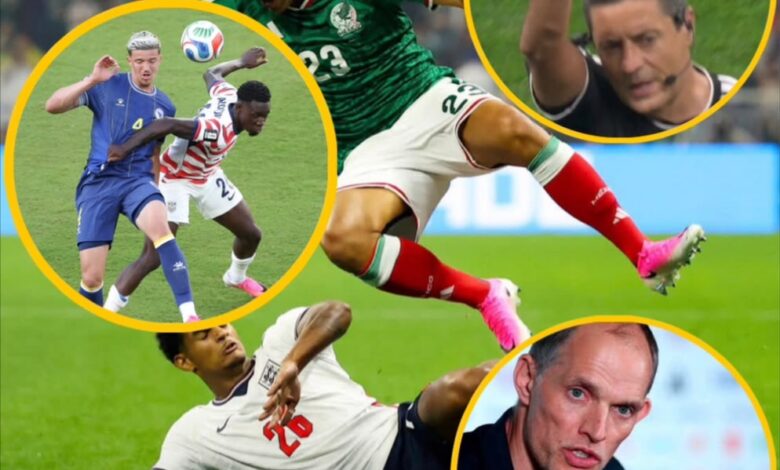
adminTUCHEL QUESTIONS FIFA’S DISCIPLINARY STANDARDS AFTER QUANSAH RED CARD : ENGLAND BOSS HIGHLIGHTS DOUBLE STANDARDS IN BALOGUN CASE
Tuchel Questions FIFA’s Disciplinary Fairness After Quansah Red Card, Warns of Double Standards
Introduction
England manager Thomas Tuchel has voiced strong concerns over the integrity of FIFA’s disciplinary procedures following Jarell Quansah’s contentious red card during England’s World Cup Round of 16 victory over Mexico.
While Tuchel insisted that Quansah’s challenge did not warrant a sending-off, his remarks extended well beyond player defence. He openly questioned the uniformity of FIFA’s rulings, drawing pointed comparisons to the case of U.S. striker Folarin Balogun, whose suspension was unexpectedly overturned earlier in the tournament.
Tuchel’s comments have ignited widespread discussion among fans, analysts, and officials, with many asking whether FIFA’s decision-making is genuinely impartial—or if outside influences are playing a part.
The Quansah Incident
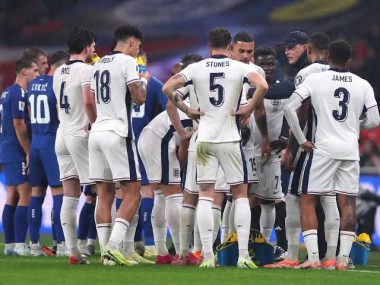
England’s 3–2 win over Mexico was marred by Quansah’s 68th-minute dismissal. The Liverpool defender challenged Jesús Gallardo, making contact with the ball but catching the Mexican full-back with his trailing leg.
Referee Daniele Orsato initially waved play on, but after a VAR review, he reversed his call and produced a straight red card. The decision forced England to play the remainder of the match with ten men, prompting immediate protests from Tuchel and his coaching staff.
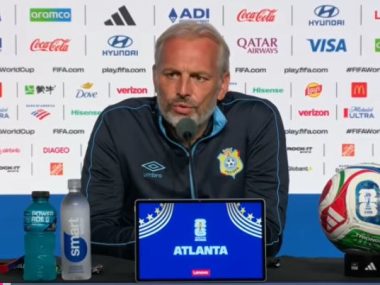
Speaking afterwards, Tuchel stated: “We cannot classify every strong tackle as a red-card offence. Football is a contact sport. Jarell took the ball cleanly. In my view, that is not a red card.”
Tuchel’s Wider Criticism
Tuchel’s frustration went beyond the single incident, as he used it to underline what he perceives as deeper flaws within FIFA’s disciplinary system:
· Over-reliance on VAR: Tuchel suggested that constant video reviews are eroding referees’ authority, leading to excessively technical judgments that ignore the flow and physicality of the game.
· Flawed Appeals Process: He warned that disciplinary hearings risk turning football into a “legal drama,” where outcomes hinge on procedural technicalities rather than the spirit of the laws.
· Loss of Credibility: Tuchel implied that FIFA’s reputation is suffering when rulings appear arbitrary or vulnerable to external interference.
His tone reflected growing impatience: “If a player’s suspension can be overturned simply because someone makes a phone call, then the system is broken. We need consistency, not politics.”
The Balogun Comparison
Tuchel’s allusion to “phone calls” was a clear reference to the Folarin Balogun affair. The U.S. striker had been sent off in a group-stage match against Bosnia-Herzegovina and would ordinarily have served a one-game ban.
However, FIFA invoked Article 27 of its disciplinary code to suspend the penalty, citing “exceptional circumstances.” Reports emerged that U.S. President Donald Trump had personally contacted FIFA President Gianni Infantino to request a review.
Balogun was subsequently cleared to face Belgium—a decision that angered Belgian officials and drew widespread criticism.
Tuchel’s barbed remark—“Perhaps Harry Kane should ring the White House if we want fair treatment”—captured his belief that political influence had seeped into football’s judicial processes.
England’s Defensive Concerns
Quansah’s suspension leaves England with defensive worries ahead of their Miami quarter-final against Norway:
· Reece James is struggling with fitness.
· Djed Spence could be called up as a replacement.
· Tuchel may reconfigure his backline, possibly moving Kyle Walker to centre-back.
The Football Association is considering an appeal, citing the Balogun precedent. Yet Tuchel remained doubtful: “If FIFA sets a precedent, they must apply it across the board. Otherwise, appeals become meaningless.”
Fan and Media Reactions
The incident has provoked strong responses across the football community:
· Fans: Many England supporters felt Quansah’s red card was excessive, with social media campaigns such as #JusticeForQuansah gaining momentum.
· Pundits: Gary Neville labelled the call “absurd,” while Rio Ferdinand called it “a disgrace.”
· International Press: Mexican media defended the decision, arguing Gallardo was endangered, while American outlets focused on Tuchel’s Balogun comparison, framing it as proof of FIFA’s inconsistent standards.
The Bigger Picture: VAR and Disciplinary Integrity
Tuchel’s remarks have revived the wider debate over VAR and disciplinary fairness:
· VAR’s Role: Detractors argue that VAR promotes overly literal readings of incidents, often disregarding context and intent.
· Refereeing Autonomy: Frequent interventions undermine on-field officials, leaving them hesitant to make decisions without technological confirmation.
· Political Interference: The Balogun case has intensified fears that disciplinary rulings can be swayed by external lobbying, damaging trust in FIFA’s impartiality. UEFA officials have already criticised FIFA’s handling of the matter, describing it as a breach of integrity.
Historical Context
Quansah’s red card adds to a list of England’s notable dismissals at major tournaments:
· David Beckham vs Argentina (1998)
· Wayne Rooney vs Portugal (2006)
· Raheem Sterling in a Nations League match (2019)
Each case stirred national debate, but Tuchel’s reference to Balogun introduces a fresh concern—that disciplinary decisions may be not only inconsistent but also subject to political manoeuvring.
Conclusion
Thomas Tuchel’s assertion that Jarell Quansah’s tackle did not merit a red card has evolved into a broader critique of FIFA’s disciplinary framework.
By drawing attention to the Balogun case, he has underscored the urgent need for transparency and uniformity. For England, the immediate issue is whether Quansah’s suspension will be upheld—a ruling that could have a significant impact on their quarter-final clash with Norway.
For FIFA, the stakes are higher: restoring faith in a system that many now view as susceptible to outside pressure. As Tuchel put it, “Football must be fair. If it is not fair, then it is not football.”

 admin
admin