 admin
adminArgentina’s Controversial Victory Over Cape Verde Sparks Global Debate Over Offside Decisions
Argentina’s dramatic 3-2 extra-time victory over Cape Verde in the FIFA World Cup Round of 32 has become one of the tournament’s biggest talking points, with attention shifting from the thrilling contest itself to two contentious offside decisions that divided football supporters across the globe.
Moments after the final whistle, social media was flooded with freeze-frame images, video clips and heated reactions from fans questioning whether Argentina should have had two goals disallowed.
Cape Verde supporters claimed their side had been denied justice, while others argued that the match officials had correctly applied the Laws of the Game.
The debate quickly spread across football communities worldwide, with thousands of supporters analysing the incidents from every possible angle and demanding explanations from FIFA and the Video Assistant Referee (VAR) team.
The Incidents That Triggered the Controversy
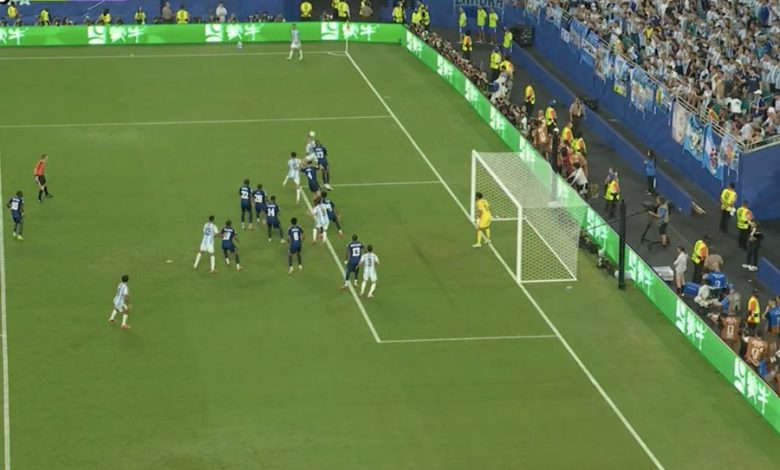
One of the most debated moments came from an Argentina corner late in the match. As the ball was delivered into the penalty area, several Argentine attackers positioned themselves close to the Cape Verde goal while defenders attempted to maintain their defensive line.
Images shared online appeared to show one Argentina player beyond the last defender, prompting many supporters to conclude that the goal should have been ruled out for offside.
Within minutes, screenshots circulated widely on social media accompanied by claims that Cape Verde had been unfairly treated. Many fans questioned how VAR had allowed the goal to stand, while others accused the officials of making a serious error.
However, determining an offside offence involves far more than examining a single still image.
Why Screenshots Do Not Tell the Full Story
One of the biggest misconceptions surrounding offside decisions is the belief that a freeze-frame alone can determine whether a player was offside.
In reality, the decision depends on the precise instant the ball is played by a teammate. Even a split-second difference can completely change a player’s position relative to the defenders.
VAR officials use calibrated technology to identify the exact moment of the pass before drawing the official offside lines. Images circulating on social media rarely capture that precise point, making them an unreliable way to judge such decisions.
How the Officials Reached Their Decision
Following a VAR review, the match officials concluded there was no punishable offside offence.
According to the interpretation of the incident, the attacker who appeared closest to goal was either level with the second-last defender when the ball was played, kept onside by another defender positioned nearer the goal line, or was not actively involved in play in a manner that would constitute an offside offence.
As a result, the original decision remained unchanged and both goals stood after the review.
There has been no official confirmation from FIFA stating that the goals should have been ruled out, despite widespread claims circulating online.
Understanding the Offside Law
The controversy also highlighted how frequently the offside law is misunderstood.
A player is not automatically penalised simply for standing beyond the defensive line. An offence only occurs if the player is in an offside position when a teammate plays the ball and then becomes actively involved in the move.
A player may avoid being penalised if they do not touch the ball, do not interfere with an opponent, do not obstruct the goalkeeper, or receive possession after a deliberate defensive play.
These technical details often explain why goals that appear suspicious in still images are ultimately allowed to stand.
Why Cape Verde Fans Felt Aggrieved
Cape Verde supporters understandably believed their team had been unfortunate.
The freeze-frame images that spread online appeared convincing at first glance, and many football pages shared them without including the complete sequence of play, the precise moment of the pass or the calibrated VAR graphics used by officials.
Without that additional context, many supporters reached conclusions based solely on incomplete visual evidence.
It is a familiar pattern in modern football, where isolated screenshots frequently spread much faster than the official explanations.
VAR’s Role in Reviewing Goals
Every goal scored during the tournament is automatically reviewed by VAR before play resumes.
Officials examine several factors, including the timing of the pass, player positioning, possible interference with opponents, goalkeeper obstruction and any offences that may have occurred during the attacking phase.
If there is clear evidence of an offside infringement, the goal is overturned. If not, the referee’s original decision is upheld.
In Argentina’s victory over Cape Verde, VAR completed its checks and found no reason to recommend disallowing either goal.
An Emotional Contest for Both Nations
The debate surrounding the officiating was intensified by Cape Verde’s outstanding performance.
Playing in their first World Cup knockout match, the underdogs twice battled back against the reigning world champions and forced the game into extra time before eventually suffering a narrow 3-2 defeat.
Their fearless display earned widespread praise from football fans and pundits, many of whom felt the African nation had exceeded expectations despite the result.
Reaction Across the Football World
Supporters remained divided long after the final whistle.
Some insisted the goals should never have counted, while others urged fans to watch the full replay rather than relying on freeze-frame images.
Several analysts also reminded supporters that VAR decisions are based on calibrated technology and the complete sequence of play, not isolated screenshots shared online.
The discussion quickly developed into one of the biggest refereeing debates of the tournament.
Focus Remains on the Football
Away from the controversy, Argentina praised the quality of their opponents.
Head coach Lionel Scaloni acknowledged that Cape Verde had pushed his side to the limit and described the match as one of the toughest tests of the competition, highlighting the unpredictable nature of knockout football.
Cape Verde also departed the tournament with their heads held high after producing a performance that won admiration around the world.
Final Verdict
Argentina’s victory over Cape Verde will be remembered not only for its drama but also for the fierce debate surrounding two closely scrutinised offside decisions.
Although many supporters remain unconvinced, both incidents were reviewed by VAR and allowed to stand under the current interpretation of the Laws of the Game. There has been no official statement from FIFA acknowledging that either goal should have been disallowed.
As with many marginal offside calls in modern football, opinions continue to differ. What cannot be disputed, however, is that the match provided one of the most entertaining and emotionally charged encounters of the tournament, ensuring the discussion surrounding those decisions will continue well beyond the World Cup.


 admin
admin