 admin
adminThe Premier League has provided an explanation for the controversial decision to disallow Brennan Johnson’s goal for Everton against Hull City, sparking fresh debate among football supporters over the use of VAR and the interpretation of the offside rule.
Referee Michael Salisbury found himself at the centre of attention after Johnson thought he had given Everton the lead during Sunday’s Premier League encounter at the MKM Stadium. However, following a lengthy VAR review, the goal was overturned, leaving Everton’s players frustrated and raising questions about the officials’ decision.
The incident quickly became one of the biggest talking points from the match, with supporters debating whether Johnson had genuinely interfered with an opponent or whether Everton should have been allowed to celebrate their breakthrough.
Premier League Explains Why Brennan Johnson’s Goal Was Disallowed
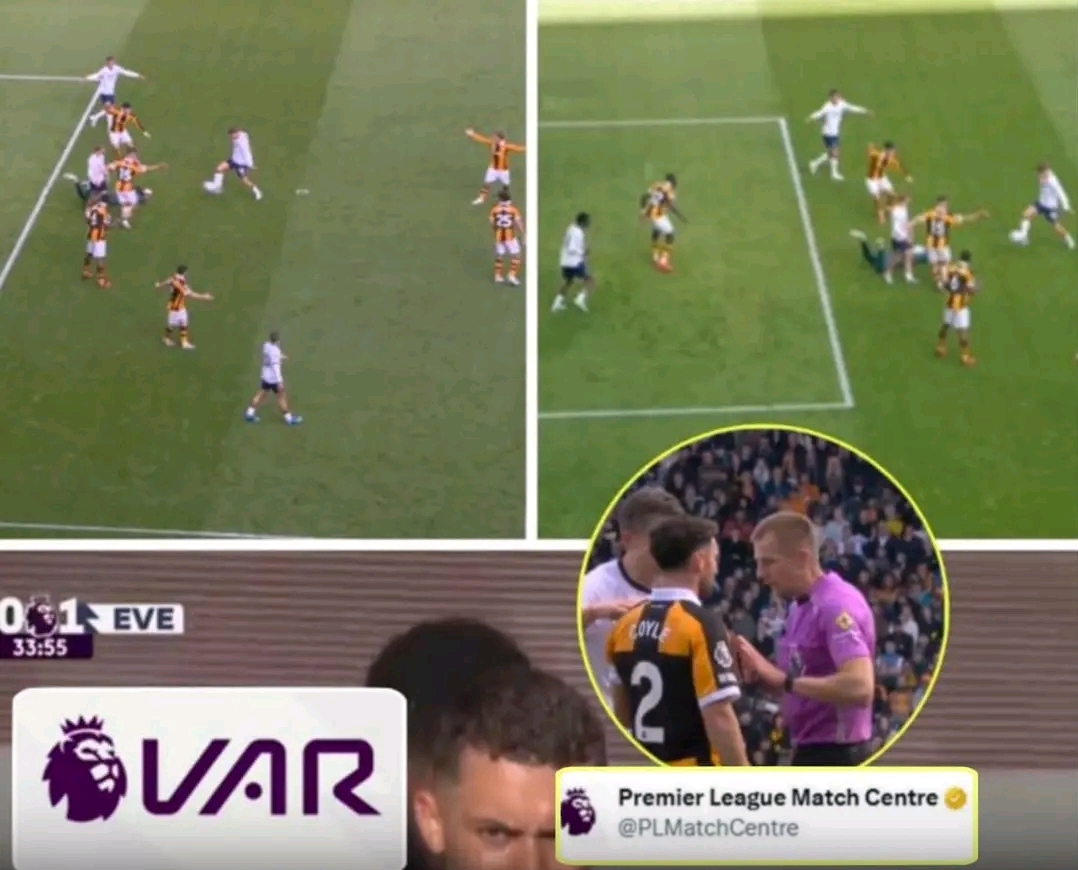
Everton believed they had taken the lead in the 34th minute when Johnson found the back of the net following a chaotic attacking sequence inside Hull City’s penalty area.
The move began when Harrison Armstrong attempted a shot after a dangerous ball into the box. Hull goalkeeper Konstantinos Tzolakis struggled to deal with the situation, while Hull’s defenders desperately attempted to prevent Everton from scoring.
After the initial effort was blocked, the ball eventually fell into Johnson’s path, and the Everton forward helped send it into the net.
The celebrations, however, did not last long.
The officials reviewed the incident, and Salisbury was instructed to examine the footage on the pitchside monitor. After reviewing the situation, the referee overturned his original decision to award the goal.
According to the Premier League Match Centre’s explanation, Johnson was in an offside position and was judged to have been challenging an opponent for the ball.
The explanation stated: “After VAR review, the referee overturned the original decision of goal to Everton – with Johnson in an offside position and deemed to be challenging an opponent for the ball.”
The referee subsequently communicated that Everton’s number 22 had challenged Hull City’s number three while in an offside position, resulting in the goal being ruled out.
The decision immediately triggered frustration among Everton supporters, many of whom believed the attacking move should have resulted in a goal.
Why VAR Intervened in the Controversial Decision
The main issue surrounding the incident was not simply Johnson’s position when the initial shot was taken. Instead, the officials had to determine whether his involvement affected an opponent’s ability to play the ball.
Football’s offside law allows officials to penalise a player who is in an offside position and becomes involved in active play by interfering with an opponent.
Consequently, a player does not necessarily need to touch the ball to commit an offside offence. If the player challenges an opponent for the ball or otherwise interferes with an opponent in a way covered by the laws, the goal can be disallowed.
In Johnson’s case, the officials reportedly concluded that his involvement in the sequence constituted interference with an opponent.
Former Premier League assistant referee Darren Cann backed the intervention, describing it as a correct decision because Johnson challenged Hull defender Ryan Giles while in an offside position.
However, the incident has continued to generate discussion because such decisions require officials to interpret a player’s actions and their impact on an opponent rather than relying solely on a straightforward offside-line measurement.
This distinction has once again placed the spotlight on how VAR decisions are communicated to supporters.
David Moyes Furious as Everton Question the Decision
Everton manager David Moyes was reportedly unhappy with the decision, expressing frustration over the terminology used to explain the incident.
The experienced manager questioned the phrase “subjective offside,” which was used to describe the type of decision that required the referee to assess whether Johnson had interfered with an opponent.
Moyes was quoted as saying: “I don’t know what subjective offside is, and I don’t think any of you do either. I’ve been in football a long time. I’ve never heard of that term before tonight.”
His reaction reflected the frustration within the Everton camp after what they believed was an important goal had been taken away.
For Everton, the incident represented a frustrating moment in a match where they were attempting to secure another positive result. The intervention also reignited questions about the consistency of VAR decisions, particularly when an attacking player is judged to have interfered with an opponent without necessarily making direct contact with the ball.
Nevertheless, disagreement from a manager or supporters does not automatically establish that an official made an incorrect decision. The central issue remains whether the referee correctly applied the offside law to Johnson’s involvement.
Former Officials Offer Their Verdict
The decision also attracted attention from football analysts and former match officials.
Darren Cann reportedly supported the VAR intervention, arguing that Johnson was in an offside position when Armstrong’s shot was taken and subsequently challenged an opponent.
His assessment was that Johnson’s actions amounted to interfering with an opponent under the laws of the game.
Other observers, however, questioned aspects of the incident, including the time required to reach a final decision.
The differing reactions demonstrate why offside decisions involving interference can generate significant controversy. While some incidents can be resolved through objective measurements, others require the referee to assess whether a player’s actions affected an opponent’s ability to play the ball.
For supporters, this can make it difficult to understand why one goal is allowed while another is overturned in seemingly similar circumstances.
The latest incident has therefore renewed calls for clearer explanations whenever VAR intervenes in a major match.
Hull City and Everton Share the Points
Despite the controversy surrounding Johnson’s disallowed goal, the match continued to produce drama after the interval.
Hull City eventually broke the deadlock through Joe Gelhardt before Everton responded through Kiernan Dewsbury-Hall, who scored the equaliser seven minutes later.
Both teams continued to search for a decisive goal, but neither side managed to secure victory, with the contest ending in a 2-2 draw.
For Hull City, the result provided an opportunity to take encouragement from their performance against Everton. The Tigers showed resilience after the disallowed goal and managed to remain competitive throughout the encounter.
Everton, meanwhile, were left to reflect on the missed opportunity to take an early lead and the controversy that followed.
Although it is impossible to determine precisely how the match would have unfolded had Johnson’s goal stood, the decision became a major talking point after the final whistle.
Fans Demand Clarity Over VAR Decisions
The controversy surrounding Johnson’s disallowed goal has once again raised questions about how Premier League officials communicate their decisions.
VAR was introduced to help referees make more accurate decisions in important moments, but incidents involving subjective interpretations continue to divide opinion among supporters.
The distinction between being in an offside position and committing an offside offence remains particularly important. A player can be in an offside position without being penalised, but involvement that interferes with an opponent can change the outcome of an attacking move.
In Johnson’s case, the officials concluded that his involvement met that threshold.
Nevertheless, the frustration surrounding the decision highlights the importance of providing clear, understandable explanations when a goal is overturned.
For Everton supporters, the priority will be seeing their team move forward without allowing the controversy to overshadow their wider campaign. For Hull City, the draw offers its own positives after a fiercely contested encounter.
The debate over Salisbury’s decision is likely to continue, particularly among supporters who remain unconvinced by the explanation.
Ultimately, the Premier League’s reported clarification has explained the reasoning behind the decision, but it has not ended the argument over whether Johnson’s involvement warranted an offside offence.
What is your verdict? Was Michael Salisbury right to disallow Brennan Johnson’s goal against Hull City, or should Everton’s goal have stood? Share your opinion in the comments below.


 admin
admin