 admin
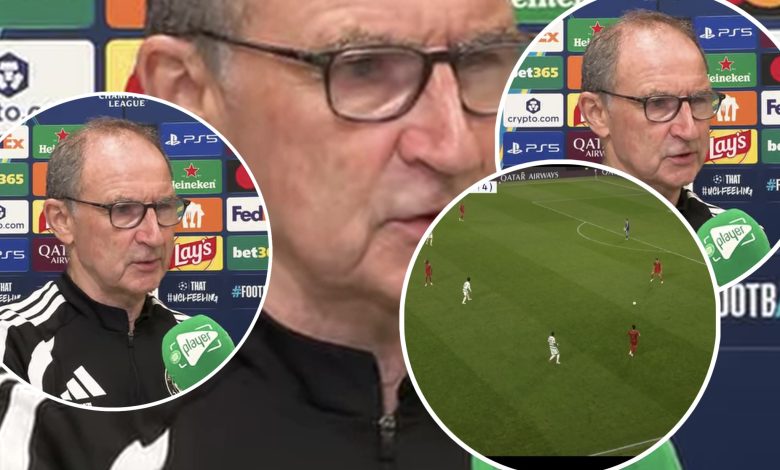
adminCeltic’s Champions League hopes came to a devastating end on Tuesday night in Austria, and manager Martin O’Neill made no attempt to sugarcoat the collapse.
After a 5-1 extra-time defeat to LASK overturned their commanding four-goal aggregate lead, the veteran boss delivered a scathing review of his team’s performance, pointing to a string of costly mistakes—both individual and collective—that turned a seemingly assured path to the group stage into one of the club’s most humiliating European nights in recent memory.
Arriving at the Raiffeisen Arena with a 3-0 first-leg cushion, Celtic appeared to have sealed the tie when Callum McGregor struck in the 21st minute to make it 4-0 on aggregate. For a fleeting moment, the traveling fans allowed themselves to believe the job was done. Then came the unraveling.
A loose pass in midfield invited pressure, a defensive error allowed Moses Usor to pull one back before halftime, and from that point, the Scottish champions looked a pale imitation of the side that had dominated the first leg.
Early in the second half, another cheap concession from range made it 2-1 on the night. A third—a stunning strike from outside the box—cut the aggregate lead to just one. Then, in stoppage time, a failure to deal with a routine header handed LASK the equalizer that forced extra time.
The fatal blow came in the 109th minute as the hosts completed their sensational comeback. A late penalty save from Viljami Sinisalo only delayed the inevitable.
O’Neill held nothing back. “We got what we deserved,” he said, echoing his captain’s words but going further in his condemnation. “There were moments tonight where we looked afraid, where we abandoned the basics, and where individuals made decisions that proved costly.
You can’t hand out goals like that at this level and expect to survive. The first came from a careless giveaway in a dangerous area. The second and third were down to us backing off and allowing shots we should never have permitted.
The stoppage-time equalizer was pure softness—failing to clear a cross and a rebound that should have been dealt with. In extra time, we had nothing left. That’s not the Celtic standard. Those moments, those individual errors, and the collective drop in intensity—that’s exactly why we’re out of the Champions League.”
The manager refused to single out any one player, instead painting a picture of a team that lost its structure, composure, and fighting spirit after the early goal. He criticized the midfield for failing to dictate tempo once LASK pushed higher, the defense for losing organization under sustained pressure, and the attackers for vanishing as an outlet when the game became stretched.
“We had players who stopped wanting the ball,” O’Neill continued. “Players who didn’t track runners. Players who made poor choices under pressure. When you squander a four-goal lead, you can’t pretend everything was fine. It wasn’t. Key moments defined the night, and those moments were ours to manage. We didn’t.”
The financial fallout is severe. Missing the Champions League group stage will cost Celtic a significant sum—early estimates suggest losses could reach tens of millions when factoring in prize money, broadcasting rights, and the commercial lift that comes with regular exposure on Europe’s premier stage. For the second straight season, the club will instead compete in the Europa League—a familiar competition, but one offering far less reward and more taxing travel for an already stretched squad.
Social media exploded within minutes of the final whistle. Fans expressed disbelief that a side capable of dominating domestically could fall apart so completely when it mattered most. Clips of the defensive lapses and soft goals were shared widely, accompanied by fury over the lack of leadership once the first goal went in. Many pointed to the passive body language after the equalizer, the failure to mount any sustained response, and the sense that the team simply ran out of ideas and resolve. Others noted that warning signs were present even in the first leg, when LASK had chances disallowed—only for Celtic to ignore the lesson.
This isn’t the first time Celtic have endured a painful European exit under pressure, but the manner of this one will rank among the lowest points. Blowing a four-goal aggregate lead is rare at any level. Doing so against a side they had thoroughly beaten just a week earlier makes it even more galling. O’Neill, brought in to bring stability and progress, now faces the twin challenge of lifting a dressing room reeling from public embarrassment and readying the team for a domestic campaign where expectations remain sky-high.
The manager insisted the response begins immediately. “We have to look each other in the eye and ask if that was good enough. It wasn’t. There will be tough conversations. There will be hard truths. The players know which moments cost us. I know which moments cost us. The fans know. Now we have to make sure it never happens again.”
Whether those words translate into a tighter, more resilient Celtic remains to be seen. For now, the only certainty is that a Champions League place that was well within reach has slipped away—thanks to a series of poor choices, defensive fragility, and a collective failure to show the character demanded when the pressure peaked. Martin O’Neill has called it out. The question is whether the players can respond on the pitch in the weeks and months ahead.
Celtic’s European campaign at the elite level is over for another year. The inquest has only just begun.

 admin
admin