 admin
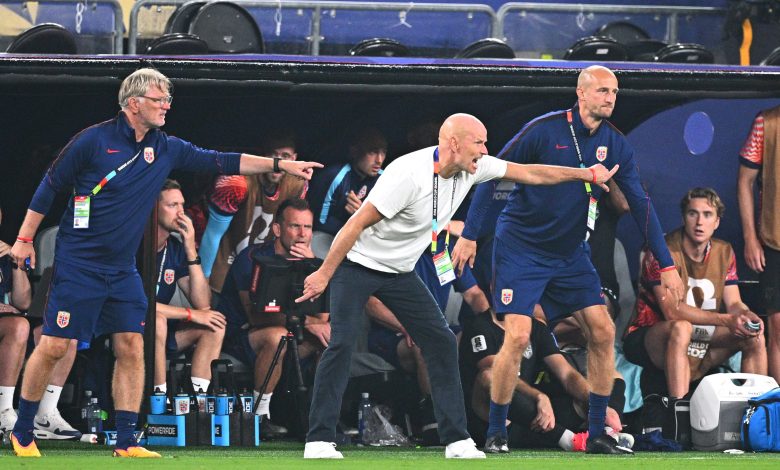
admin“THEY GET AWAY WITH EVERYTHING” – SOLBAKKEN SLAMS VAR AFTER NORWAY’S CLEAR GOAL IS DENIED
Norway’s World Cup Dream Dashed by England in a Quarterfinal Shrouded in VAR Controversy
The Hard Rock Stadium, bathed in the oppressive heat of a South Florida evening, played host to a World Cup quarterfinal that will be dissected as much for its contentious refereeing decisions as for the football on display.
Norway’s historic campaign came to a devastating end with a 2-1 loss to England, a match that laid bare the razor-thin margins of modern elite sport and rekindled fierce arguments over the interference of Video Assistant Referee (VAR) technology.
In their maiden World Cup quarterfinal appearance, Norway seized a deserved lead in the 36th minute through Andreas Schjelderup’s blistering strike. England clawed their way back just before the interval with a Jude Bellingham equalizer—a goal instantly swallowed by dispute.
A subsequent Norwegian goal, which would have restored their lead, was ruled out, unleashing a torrent of post-match fury from head coach Ståle Solbakken, who directed blistering criticism at both the match officials and the VAR framework.
A Clash of Underdog Spirit and Established Power
Norway’s journey to this stage was nothing short of extraordinary. Emerging from a long major-tournament drought, they stunned the football world by topping their group and eliminating Brazil in the Round of 16.
Spearheaded by the talismanic Erling Haaland, the creative Martin Ødegaard, and a disciplined ensemble molded by Solbakken, the Norwegians combined tactical sophistication with a relentless “Viking” ethos, sparking chants of “Ro, ro, ro!” from their fervent supporters.
England, guided by Thomas Tuchel and boasting a roster brimming with Premier League prowess and World Cup experience, entered as favorites. Yet on this sticky Miami night, it was Norway who set the tempo, especially following their opener.
Schjelderup’s goal was a masterpiece—a left-footed rocket from distance that left Jordan Pickford helpless. For a spell, the underdogs looked poised for another seismic upset, with Haaland’s movement unsettling the English defense and the midfield trio of Ødegaard, Oscar Bobb, and company dictating play.
The Turning Point: Bellingham’s Equalizer and the “Cable Incident”
The equalizer arrived on the stroke of halftime, as Bellingham sliced inside and fired low past Ørjan Nyland. However, the goal’s legitimacy was immediately thrown into question. Replays showed that a Norwegian goal kick had struck one of the overhead skycam cables suspended above the pitch, with the deflection inadvertently benefiting England’s Anthony Gordon, who set up Bellingham.
Under FIFA regulations, interference from external objects typically warrants a dropped ball and a stoppage. Former Premier League official Mark Clattenburg, analyzing for FOX Sports, asserted that VAR should have reviewed the sequence as part of the attacking phase leading to the strike.
Norwegian players besieged French referee Clément Turpin, with Solbakken captured in a heated halftime exchange and reportedly hurling a water bottle in frustration. FIFA subsequently cited sensor data from the “connected ball” indicating no contact with the cable—an explanation that did little to soothe Norwegian grievances.
The episode was instantly dubbed “The Cable of God” by pundits, evoking memories of past VAR scandals and reinforcing perceptions of technological favoritism toward football’s traditional powers.
Second-Half Agony and a Disallowed Goal
Norway emerged as the stronger side in the second half, carving out the clearer openings. Kristoffer Ajer struck the crossbar, and in the 55th minute, Torbjørn Heggem bundled the ball home from a corner to seemingly make it 2-1. Ecstatic celebrations were cut short as VAR intervened.
The review pinpointed a marginal foul by Haaland on England’s Elliot Anderson earlier in the build-up, deeming the contact sufficient to disallow the goal. To Norwegian eyes, it was standard set-piece grappling, not a clear infraction. Solbakken and his charges were incensed. The score remained locked at 1-1, and England ultimately snatched a winner in extra time through Bellingham once more.
In a raw post-match interview, Solbakken unleashed a scathing critique, accusing England of receiving preferential treatment and labeling the evening as “top-level sport at its worst—or best, depending on your perspective.” Through tears, he lauded his players’ Herculean effort, stating, “We didn’t get the margins today.”
The Wider VAR Debate
The match has fueled the growing backlash against VAR, a system intended to rectify clear errors but which increasingly disrupts football’s rhythm and invites subjective interpretation.
The cable deflection incident exposes gaps in current protocols—where stadium setups, broadcast angles, and sensor data can yield conflicting evidence. Solbakken, a longstanding advocate for limiting VAR to blatant mistakes, voiced a frustration shared across the sport: that technology, reliant on human judgment, is undermining on-field referees.
For England, the victory extends their World Cup journey, though Tuchel’s men appeared unconvincing. Bellingham’s brace solidified his reputation as a clutch performer, but sterner tests await.
For Norway, the exit is deeply painful, yet this generation—led by Haaland, Ødegaard, and a resilient squad—has redefined the nation’s footballing ceiling. Reaching the quarterfinals, no small feat for a country of just over 5 million, offers a springboard for future ambitions. Solbakken, whose own narrative includes surviving a heart attack at 33 and building success across European clubs, has forged a team that now stands tall among the game’s elite.
Pride and a Nation’s Hope
As the final whistle sounded, Norwegian players collapsed in disbelief. Haaland, the symbol of this renaissance, cut a dejected figure, while Ødegaard sought to console teammates. Yet Solbakken gathered his squad to salute the traveling supporters, whose unwavering roar had been a constant presence.
Back home, Norway’s response was a mix of pride and indignation, with social media ablaze over the controversial decisions and calls for greater FIFA transparency. The team’s epic run—from group success to eliminating Brazil—has galvanized a football-crazy nation and inspired a new generation.
England, meanwhile, will reflect on a narrow escape that exposed defensive frailties and a lack of midfield control. Tuchel knows significant improvements are essential if they are to claim the ultimate prize.
The Future of Football’s Laws
This quarterfinal adds another chapter to the growing dossier of VAR debates at major tournaments. Issues of consistency, the reliance on broadcast angles over on-field technology, and preserving the game’s flow remain unresolved. Calls for semi-automated offside systems and clearer external-interference protocols will only intensify.
Solbakken’s outspoken nature, long a hallmark of his leadership, reflects a fierce protectiveness of his players and a passion for the sport’s integrity. While his comments may invite scrutiny from governing bodies, they echo the sentiments of fans weary of officiating overshadowing the action.
As the 2026 World Cup continues, Norway’s players return as heroes. Their achievement proves that with talent, belief, and preparation, smaller football nations can challenge the giants. Solbakken’s legacy as the architect of Norway’s golden era is now secure.
In the end, football’s intoxicating blend of drama, dispute, and brilliance was on full display in Miami. While England march on, Norway’s valiant near-miss will endure as one of the tournament’s most compelling stories—a reminder that the beautiful game’s unpredictability and the debates it provokes are what keep the world watching.

 admin
admin