 admin
Date: November 16, 2026
A single flash of anger on a football pitch has once again exposed the raw nerve running through the modern game: the accusation of diving. The explosive phrase—“He fucking dived, I didn’t touch him”—reportedly uttered by a defender furious at being penalized for a challenge he believed was theatrical, has gone viral, igniting a familiar but no less bitter debate about honesty, gamesmanship, and the impossible job of the referee.
While the specific identity of the defender and the exact match remain a subject of online speculation, the sentiment is universally recognizable. It is the cry of a player who feels the integrity of the contest has been violated not by a mistimed tackle, but by a deliberate act of deception. The incident has thrust the issue of simulation back into the spotlight, serving as a stark reminder that for all the technological advances of VAR, the fundamental interpretation of a player’s intent remains deeply human and deeply contested.
The Flashpoint: Anger and Accusation
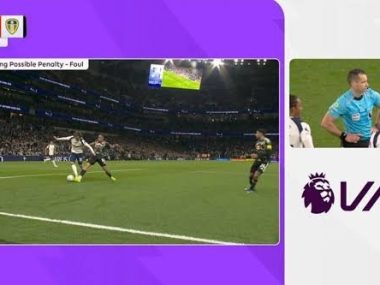
The controversy erupted following a contentious penalty decision. According to eyewitness accounts and footage circulating on social media, a forward went to ground inside the penalty area after minimal, if any, contact from a trailing defender. The referee, unmoved by the initial challenge, was reportedly instructed by VAR to review the incident. Upon consulting the pitch-side monitor, the official reversed his decision, awarding a spot-kick and brandishing a yellow card.
The defender’s reaction was visceral. Teammates had to physically restrain him as he gestured furiously toward the prone attacker. The lip-read phrase—“He fucking dived, I didn’t touch him”—captured a moment of pure, unfiltered frustration. It is a reaction that resonates deeply with defenders across all levels of the game, who increasingly feel that the modern attacker is rewarded for falling rather than fighting to stay on their feet.
The Broader Context: A Season of Simulation Controversies
This latest flashpoint does not exist in a vacuum. The 2026/27 season has already seen several high-profile incidents that have pushed the debate over simulation to the forefront of football discourse.
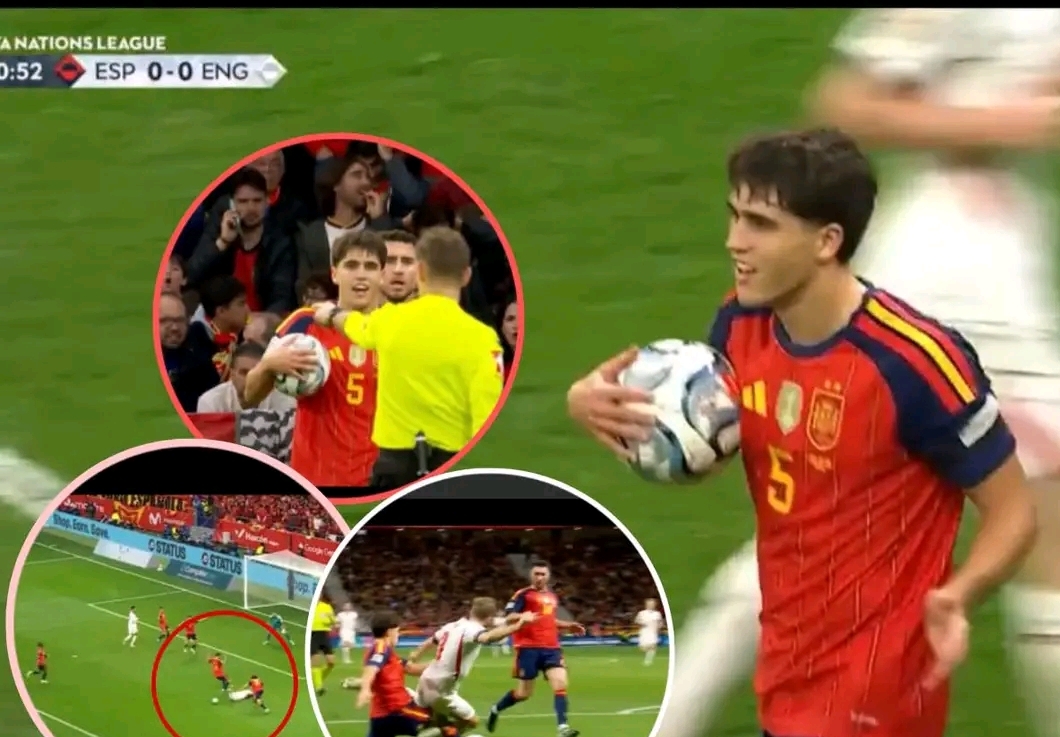
Just weeks ago, the football world was consumed by the fallout from a controversial incident in the UEFA Nations League clash between England and Spain. Jude Bellingham was captured on camera furiously confronting his Real Madrid teammate Marc Cucurella, appearing to accuse the Spanish defender of exaggerating an injury to influence the referee during a VAR review . While the exact words were never confirmed, the visual of Bellingham attempting to physically pull Cucurella to his feet spoke volumes about the growing intolerance among players for perceived theatrics .
Similarly, in the Premier League, the case of Alexander Isak became a referendum on the very logic of diving. The Liverpool striker was denied a clear penalty against Arsenal when Jurrien Timber pulled his shirt. The Key Match Incidents panel later ruled the decision was wrong—a penalty should have been given . Yet, the most telling aspect of the saga was Isak’s refusal to go to ground. “I was focused on scoring,” he explained. “It’s hard to try to score and then fall down at the same time.” . His honesty was ultimately punished by the officials, reinforcing the cynical logic that the only way to get a decision is to make sure the referee sees you on the floor.
The Defender’s Dilemma: Guilty Until Proven Innocent
The viral outburst captures the essence of the modern defender’s plight. In an era where attacking players are coached to “invite contact” and “go down professionally,” defenders operate under a presumption of guilt. Any extended leg, any hand on a shoulder, any moment of physical proximity is a potential trap.
The accused defender in this latest incident is not merely angry about a single goal conceded. He is angry at a system that he perceives as rewarding dishonesty. When a forward feels the slightest brush of contact and collapses as if struck, the defender is left with two impossible options: protest his innocence and risk further punishment, or accept the injustice and try to defend the next attack. The phrase “I didn’t touch him” is not just a denial of contact; it is a plea for the referee to recognize the difference between a foul and a fiction.
The Punditry Divide
As the clip spread across social media, the football commentariat predictably split along familiar lines.
Former defenders rallied to the cause, praising the outburst as a rare moment of honesty. “This is what every defender is thinking,” one ex-professional tweeted. “If you’re going to give a penalty for that, you’ll give fifty a game. The forward initiated the contact. It’s cheating, plain and simple.”
Former forwards and attacking midfielders, however, offered a more nuanced view. “If there’s contact, it’s a foul,” argued one prominent pundit. “The defender put his hands on him. In the modern game, you can’t do that. The forward is just being clever. If defenders don’t want to concede penalties, they shouldn’t give the referee a decision to make.”
This fundamental disconnect—between those who view the game as a physical contest where players should be expected to stay upright, and those who view it as a tactical battle where any advantage must be exploited—is at the heart of the simulation crisis.
The Role of VAR: A Double-Edged Sword
VAR was supposed to solve this problem. By providing officials with super-slow-motion replays and multiple angles, the hope was that clear evidence would separate the genuine fouls from the theatrical falls. In reality, the technology has only muddied the waters further.
Slow-motion replays, when scrutinized frame by frame, can make the faintest graze of a fingertip look like a significant impact. Conversely, they can reveal that a dramatic tumble was preceded by a mere whisper of contact. The VAR review process, with its sterile, forensic examination of human movement, often strips away the context of momentum, balance, and intent that is essential to understanding a football challenge.
In the incident that sparked the “He fucking dived” outburst, the VAR officials clearly saw something on the replay that convinced them the on-field decision was wrong. The defender, however, experienced the incident in real-time and felt no contact of sufficient force to warrant a fall. The gap between those two perceptions—the lived experience versus the forensic reconstruction—is where the controversy lives.
The Cultural Chasm
The debate also reflects a deeper cultural divide within football. In some footballing cultures, “winning” a penalty through clever use of the body is viewed as an art form, a sign of a striker’s intelligence. In others, particularly in the British Isles, it is viewed as a moral failing, a betrayal of the spirit of the game.
The viral anger of the defender taps into this latter tradition. It is the roar of the traditionalist who believes that the game should be a contest of skill and strength, not a test of who can deceive the referee most effectively. And yet, the reaction of the officials—and the subsequent awarding of the penalty—suggests that the sport’s governance has largely accepted the logic of the simulation: that the responsibility lies with the defender to avoid any contact, however minimal, rather than with the attacker to remain honest.
The Aftermath
As the clip continues to circulate, the specific identity of the defender and the match may fade from memory. The phrase, however, will endure. “He fucking dived, I didn’t touch him” joins a long list of footballing laments, a cousin to “the referee’s a wanker” and “you don’t know what you’re doing.”
But beneath the profanity and the raw emotion lies a genuine crisis for the sport. If players feel that honesty is penalized and deception is rewarded, the integrity of the game suffers. The incident serves as a reminder that no amount of technology can resolve the fundamental human questions of intent, exaggeration, and the unwritten rules of the game.
Until football’s lawmakers find a way to consistently punish simulation without deterring genuine attacking play—a task that has eluded them for decades—the cycle of dive, penalty, and furious denial will continue. And somewhere, a defender will always be left screaming into the void, convinced of his innocence and powerless to prove it.


 admin