 admin
Sunderland, England — A particularly stinging critique has emerged from the Sunderland fanbase and punditry circles, suggesting that one of the club’s current first-team regulars should be plying his trade in League One rather than occupying a crucial role at the Stadium of Light. The claim, while brutal, taps into a long-standing frustration among supporters regarding the gap between the club’s Championship ambitions and the individual output of certain key players.
The assessment comes at a time when Sunderland are looking to establish themselves as genuine promotion contenders, making the performance levels of senior squad members a topic of intense scrutiny. While the club has moved on from its darker days in the third tier, the shadow of those League One seasons still lingers in the form of player reputations and fan expectations.
The Ghost of League One Past
Sunderland’s recent history is littered with players who excelled in League One but struggled to make the step up. The most glaring example remains Will Grigg, whose £3-4 million move from Wigan Athletic in 2019 became a cautionary tale for the club . Grigg was a prolific scorer in the third tier, but his Sunderland career yielded just eight goals in total, costing the club roughly £500,000 per goal . The fan consensus on Grigg has been unequivocal; he is widely regarded as one of the most disastrous signings in the club’s modern history, a player whose “heart wasn’t in it” and who “didn’t fit the system” .
More recently, players like Denver Hume have illustrated the fine margins between tiers. Hume, a former Sunderland academy graduate, failed to cement a place in the Championship and eventually dropped down to League Two with Grimsby Town, where he has finally found his level, registering double-digit assists from left-back . The argument follows that if a player cannot consistently impact games in the second tier, the harsh reality is that their ceiling may be the division below.
The Current Flashpoint
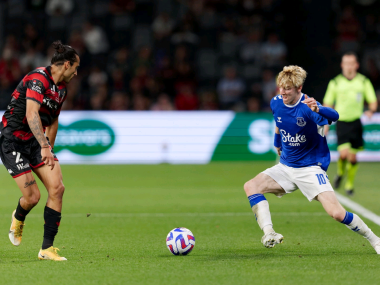
The “particularly harsh assessment” referenced in recent discourse likely targets a player whose technical gifts are undeniable but whose end product has become a source of growing irritation. Patrick Roberts often finds himself at the center of this storm . When Roberts arrived on a free transfer during Sunderland’s League One days, he was viewed as a coup—a “Premier League talent” according to former boss Tony Mowbray . However, as the team has evolved, criticism has mounted over his goal contributions.
While Roberts retains the ability to beat a man and dictate play, critics argue that his numbers—often hovering around just a handful of goals and assists per season—are not befitting a player occupying a key attacking role in a promotion-chasing side . The narrative suggests that while his dribbling is aesthetically pleasing, his lack of ruthlessness in the final third is precisely the kind of trait that separates top-end Championship players from those who float between the second and third tiers.
The Counter-Argument: Context and Quality
However, not all assessments are quite so damning. Defenders of the squad point out that Sunderland’s current setup often relies on younger, less experienced players, placing a heavier burden on the few senior professionals in the side. For instance, while Roberts’ stats may be modest, his retention of possession and adherence to the manager’s tactical shape are often cited as vital components that don’t show up on the scoresheet .
Furthermore, the club’s own transfer strategy has shifted. The disastrous big-money splurges of the Stewart Donald era—like the Grigg deal—have been replaced by a more measured approach focused on resale value and younger talent. This means that players who might have been squad players in a wealthier era are sometimes thrust into starting roles out of necessity.
The Verdict
The harsh assessment that a current starter belongs in League One serves as a Rorschach test for the Sunderland fanbase. For some, it is a valid critique of a player who has failed to evolve with the club’s rising ambitions. For others, it is an unfair scapegoating of a technically gifted footballer operating in a system that may not fully utilize his strengths.
What is undeniable is that the gap between League One and the Championship is vast. As seen with the likes of Grigg and Hume, dominance in the third tier does not guarantee success in the second. If Sunderland are to avoid the stagnation that plagued their recent past, the players currently occupying “important positions” must prove that the harsh assessment is wrong—or risk validating it with their performances.


 admin